Is Gorgias the Right AI Helpdesk for Your E-commerce Store?
Take This Quick Quiz to Find Out!
Navigating the evolving landscape of e-commerce customer support requires a clear understanding of the tools driving efficiency and customer satisfaction. This comprehensive Gorgias FAQs guide is designed to cut through the noise, offering clear, actionable insights into how this powerful platform leverages AI to transform your customer care operations.
As a cornerstone of AI-Powered Customer Support, Gorgias has become a go-to solution for thousands of Shopify, Magento, and BigCommerce merchants. We at Best AI Customer Care Central are dedicated to empowering CX leaders like you, and in this article, we explore everything from Gorgias’ core AI capabilities—like intent detection and automated responses—to its deep e-commerce integrations, data security, and even its specific limitations.
We also demystify its unique pricing model and guide you through the onboarding and migration processes.
Key Takeaways
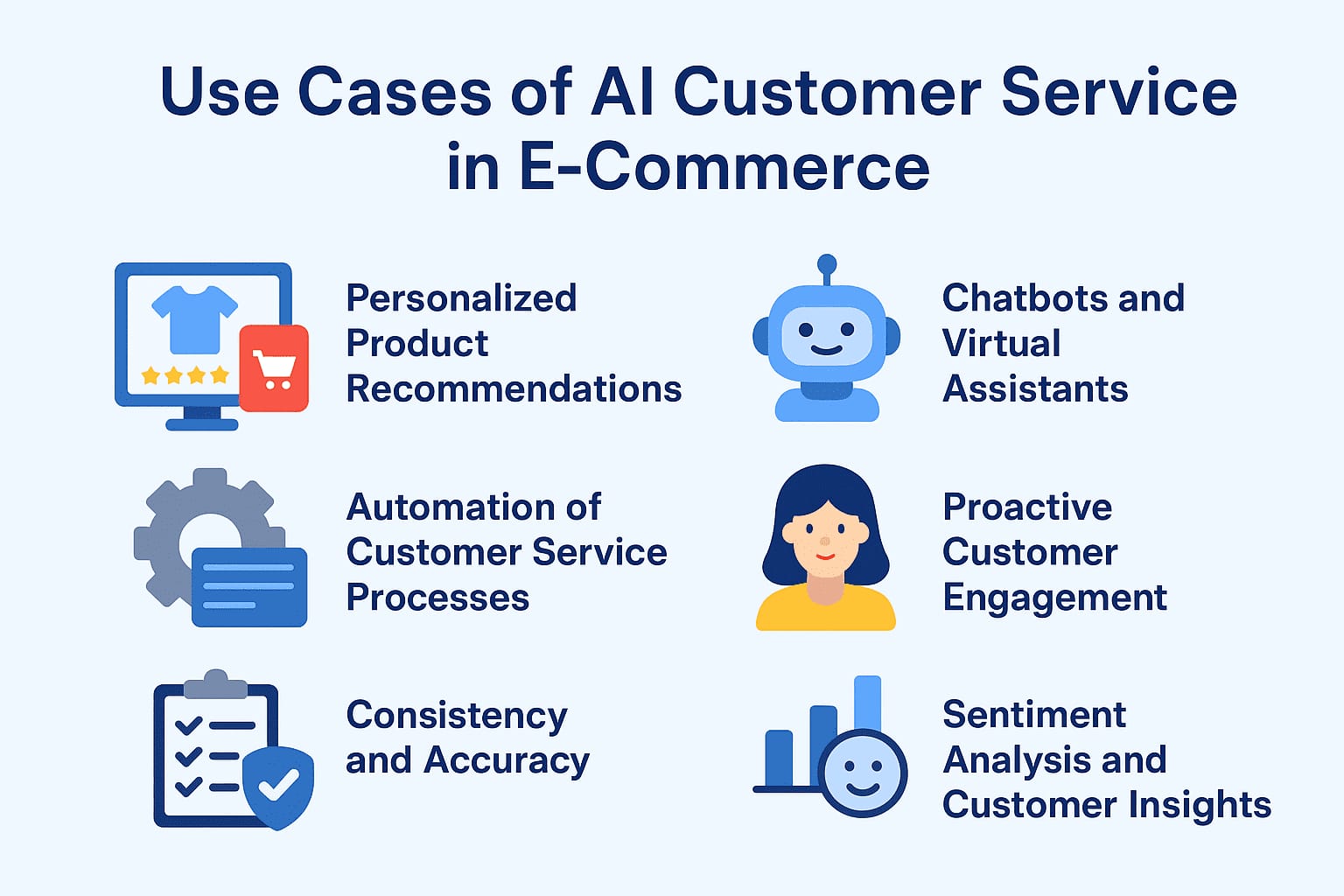
- AI-Powered Automation: Gorgias leverages AI for intent detection, sentiment analysis, and automated responses to resolve up to 40% of common support tickets without human intervention.
- E-commerce Focused: Purpose-built for Shopify, Magento, and BigCommerce with deep native integrations that enable order management directly from the helpdesk.
- Unified Workspace: Centralizes all customer communications from email, live chat, SMS, Facebook, and Instagram into a single agent dashboard for efficient management.
- Ticket-Based Pricing: Unique pricing model based on ticket volume rather than agent seats, incentivizing automation and directly aligning costs with support demand.
- Security & Compliance: SOC 2 Type II certified with full GDPR and CCPA compliance, automated PII redaction, and enterprise-grade data encryption.
What is Gorgias and how does Gorgias use AI for customer support?

Gorgias is an AI-powered customer support helpdesk platform tailored specifically for e-commerce businesses. It centralizes all customer communications from multiple channels—such as email, live chat, SMS, Facebook, and Instagram comments—into a unified agent dashboard.
This consolidation eliminates the need for agents to toggle between different tools and platforms, fostering efficient, coherent support workflows. For a deeper understanding of how Gorgias Overview and Features enhance the customer experience, consider exploring the platform’s comprehensive capabilities.
Gorgias leverages Artificial Intelligence to enhance customer service efficiency and accuracy. Its AI capabilities include:
- Intent and Sentiment Detection: Automatically analyzes the customer’s message to identify the purpose (e.g., refund request, order status inquiry) and emotional tone (e.g., frustration, satisfaction), allowing for smarter ticket prioritization.
- Ticket Automation: AI auto-tags, categorizes, and routes tickets to the right team or agent, drastically reducing manual handling steps.
- Automated Responses (Gorgias Automate): For high-volume, repetitive inquiries such as “Where is my order?”, Gorgias Automate can resolve up to 40% of common support tickets without human intervention by pulling personalized data directly from your e-commerce backend like Shopify or Magento. This automation frees agents to focus on complex problems requiring a human touch.
- AI-Suggested Replies: Agents receive AI-enhanced “Macros” which suggest the most relevant responses, ensuring faster, consistent replies across all support channels.
By merging all customer interactions into a single hub enriched with automation, Gorgias transforms customer support from a costly, reactive function into a proactive growth driver, improving key customer experience metrics like Average Handle Time (AHT) and First Contact Resolution (FCR).
Who is Gorgias best for? Is Gorgias only for Shopify stores?
Gorgias is purpose-built for e-commerce merchants, making it a leading solution for online retailers ranging from startups to multi-million-dollar brands. Although best known for its deep Shopify integration, Gorgias supports several major e-commerce platforms and is not limited to Shopify users.
The platform is optimal for businesses that:
- Operate on prominent e-commerce platforms such as Shopify, Magento, and BigCommerce. Gorgias’ native integrations enable viewing full customer order histories and executing actions like refunds directly within the helpdesk.
- Handle a high volume of repetitive inquiries about orders, shipping, returns, and refunds—common in e-commerce—which benefit greatly from Gorgias’ AI automation capabilities.
- Engage customers across multiple communication channels, including email, live chat, SMS, Facebook, and Instagram, and require a centralized workspace to unify all interactions.
- View customer service as a strategic revenue lever, prioritizing personalized, swift resolutions to improve Customer Satisfaction (CSAT) and Lifetime Value (LTV).
While Gorgias can technically be used outside of e-commerce, its strongest features and value primarily manifest when integrated with e-commerce stores. For non-e-commerce companies, broader helpdesk platforms like Zendesk or Intercom may provide more generalized capabilities.
But for Shopify stores and e-commerce brands focused on reducing support costs and boosting CX, Gorgias is a highly specialized, optimized choice. To compare with other solutions, explore comprehensive Best 10 AI-Powered Customer Support platforms available in the market.
How does Gorgias centralize customer conversations from different channels?
Gorgias centralizes conversations by integrating all your communication platforms into a single, unified agent workspace. This seamless integration enables support agents to manage messages across multiple channels without switching apps or tabs, saving substantial time and reducing errors.
Key components of how Gorgias centralizes customer interactions:
- Direct API Integrations: Gorgias connects via APIs to email accounts (e.g., Gmail, Outlook), social media business profiles (Facebook, Instagram), SMS providers (e.g., Twilio), and live chat on your website.
- Unified Customer View: When a customer contacts you through any channel, Gorgias ingests that message and generates a single “ticket.” If the same customer has contacted you before on a different channel, Gorgias merges those profiles. Agents therefore see a consolidated chronological history of all interactions, regardless of origin, providing full context to resolve issues faster.
- Social Media Support: Gorgias pulls in not only private messages but also public comments on Facebook and Instagram posts or ads, enabling your team to quickly respond to questions or complaints, manage brand reputation, and even capture sales leads in comment threads.
This centralization ensures no inquiry is missed, empowers agents with comprehensive customer histories, and accelerates resolution times, creating a frictionless support experience for both your customers and your team.
What is the difference between Gorgias and Zendesk for an e-commerce business?
Gorgias and Zendesk are both leading customer support platforms, but they cater to different business needs and philosophies—particularly for e-commerce.
Gorgias is a helpdesk built from the ground up specifically for e-commerce merchants, focusing intensely on retailer pain points. Zendesk is a more general-purpose, enterprise-grade customer support suite suitable across industries including software, healthcare, and finance.
Key differences for e-commerce:
- E-commerce Integration Depth: Gorgias offers exceptionally deep native integrations with Shopify, BigCommerce, and Magento. Agents can view entire customer order histories, issue refunds, cancel orders, duplicate orders, and create draft orders—directly from the helpdesk. Zendesk can achieve similar functionality but often requires complex third-party apps and configurations to reach this level of integration.
- Ease of Setup and Use: Gorgias is designed for rapid deployment focused on e-commerce workflows, offering an intuitive, streamlined UI aligned with agents’ needs. Zendesk’s extensive features come with a steeper learning curve and longer setup times.
- AI and Automation: Gorgias’s AI (Automate) is pre-trained on retail-specific queries like “Where is my order?” Its automation targets the most frequent repetitive e-commerce tickets, boosting ticket deflection and speeding responses. Zendesk’s AI is powerful but broadly generalized and often needs significant customization to target e-commerce nuances.
- Social Media Management: Gorgias deeply integrates Facebook and Instagram messaging and comments natively—a critical advantage for direct-to-consumer brands. Zendesk also supports social channels but social media features are less embedded in its core ecommerce workflows.
In essence, Gorgias provides a more tailored, out-of-the-box e-commerce support solution designed to boost operational efficiency and CX quickly. Zendesk excels when multi-departmental, enterprise-wide customization and complex use cases are required beyond e-commerce.
For a detailed comparison of alternatives, check out Gorgias Top Alternatives and Competitors to find the best fit for your business needs.
How does Gorgias handle data security and ensure compliance with regulations like GDPR and CCPA?
Data security and compliance are foundational to Gorgias’s platform, recognizing the sensitivity of customer information and the requirements imposed by global regulations.
Gorgias ensures robust security and compliance by:
- SOC 2 Type II Certification: Gorgias maintains this industry-standard certification, continuously audited for secure data practices that protect customer data confidentiality, integrity, and availability over time.
- GDPR Compliance: Gorgias acts as a data processor under GDPR, providing customers (the data controllers) with the tools and contractual safeguards needed to respond to data subject requests such as access, rectification, and deletion. A clear Data Processing Addendum (DPA) governs GDPR obligations.
- CCPA Compliance: It supports CCPA requirements for California residents, enabling businesses to honor consumer rights related to personal data access and deletion.
- Data Encryption: All data in transit (via TLS) and at rest (using AES-256 encryption) is encrypted to meet modern security standards.
- Sensitive Data Redaction: The platform automatically detects and redacts sensitive Personally Identifiable Information (PII) such as credit card numbers within tickets to prevent storing sensitive data unnecessarily.
- Granular Access Controls: Administrators can define detailed permission roles for agents and managers, ensuring users only access information necessary for their duties, minimizing scope for accidental data exposure.
These comprehensive protections help businesses confidently manage customer data, meet regulatory requirements, and safeguard their reputation in handling sensitive information.
What are the main limitations of Gorgias’ AI capabilities?
While Gorgias offers powerful AI-driven automation specifically for e-commerce, it has defined limitations important to understand:
- Rule-Based and Intent-Focused AI: Gorgias Automate relies on pre-defined intents and rules rather than advanced generative AI. It excels at handling predictable, high-volume questions like “Where is my order?” but struggles with complex, multi-faceted, or ambiguous inquiries that require human judgment.
- English Language Optimization: The most advanced AI automation features deliver optimal performance primarily in English. Support for other languages exists but may have reduced accuracy and nuance for intent detection, requiring additional manual configuration.
- Setup and Maintenance Requirements: To maximize effectiveness, users must invest time creating and refining “Rules” and “Macros.” These automation rules are not plug-and-play and need continuous updates as products, workflows, or customer behaviors evolve.
- No Deep Conversational AI or Empathy: Gorgias AI inserts dynamic data (order numbers, refund amounts) into templates but does not generate creative, empathetic, or contextually complex responses like generative language models can.
- Escalation to Humans: Tickets that fall outside automated rule coverage are automatically escalated to live agents, maintaining quality but meaning automation is not fully autonomous.
Expert Tip: Start by automating your top 3-5 most frequent simple questions based on historical ticket data. Mastering a small set of effective automation workflows yields far greater ROI and reduces frustration versus trying to automate everything at once.
For practical guidance on implementing these strategies, visit Gorgias Tutorials and Usecase to learn from real-world applications.
How deep is the Gorgias integration with Shopify? Can it process refunds directly?
Gorgias’s integration with Shopify is one of its standout features and a key reason many Shopify merchants choose the platform. The integration is exceptionally deep, enabling support agents to execute various critical order management actions without leaving the Gorgias interface.
Key Shopify integration capabilities within Gorgias include:
- View Complete Customer and Order Data: Agents see a detailed sidebar with a customer’s entire order history, shipping addresses, order status, and lifetime value right in the ticket.
- Issue Refunds and Cancel Orders Directly: Agents can process full or partial refunds for specific line items or amounts and cancel orders seamlessly from the helpdesk, reducing resolution time and increasing First Contact Resolution (FCR).
- Duplicate Orders and Create Draft Orders: Agents can quickly duplicate previous orders or create new draft orders on behalf of the customer within Gorgias.
- Add Tags and Order Notes: Agents can add internal tags or notes to orders for streamlined workflows and reporting.
Important Correction: Contrary to some claims, Gorgias does not support editing the contents of placed orders or modifying shipping addresses directly from the interface. These order modifications must be done within the Shopify admin panel itself. This separation ensures compliance with Shopify’s security protocols and protects against unauthorized changes.
By combining Shopify actions with automated Macros, agents can execute multi-step workflows (e.g., refund shipping cost + send a personalized message + tag the ticket) in a single click, massively boosting efficiency and reducing Average Handle Time (AHT).
How does Gorgias pricing work? Are AI features an extra cost?
Gorgias pricing is structured on a ticket-based subscription model, differing from many competitors who charge per agent seat. This model aligns costs with actual support volume and incentivizes automation.
Key elements of Gorgias pricing:
- Tiered Plans: Multiple pricing plans (Starter, Pro, Advanced, Enterprise) include different monthly allotments of billable tickets along with varying feature sets. Plans scale to support operations from small startups to enterprise levels.
- Billable Tickets Defined: A billable ticket is any conversation requiring agent intervention and response. Importantly, tickets fully resolved by Gorgias Automate’s AI-driven automation do not count as billable, providing strong motivation to build deflective automation workflows.
- Overage Fees: If you exceed your plan’s ticket limit in a month, additional tickets incur extra fees, varying by tier.
- AI Feature Costs: Core AI tools like Rules and Macros are included within standard plans. However, advanced AI-driven automation features under the Gorgias Automate add-on are priced separately based on the number of tickets successfully resolved by automation, allowing flexible scaling.
- Additional Add-Ons: Voice and SMS support integrations also incur extra costs.
This ticket-based model promotes ROI by encouraging companies to reduce manual ticket handling through automation and drive down labor costs, while adjusting pricing to match actual usage.
Is there a free trial for Gorgias, and what does the onboarding process look like?
Yes, Gorgias offers a 7-day free trial that lets you explore the platform’s key features and integrate your e-commerce store and support channels. This trial enables businesses to evaluate how Gorgias fits their workflows and customer service needs.
The onboarding journey typically includes:
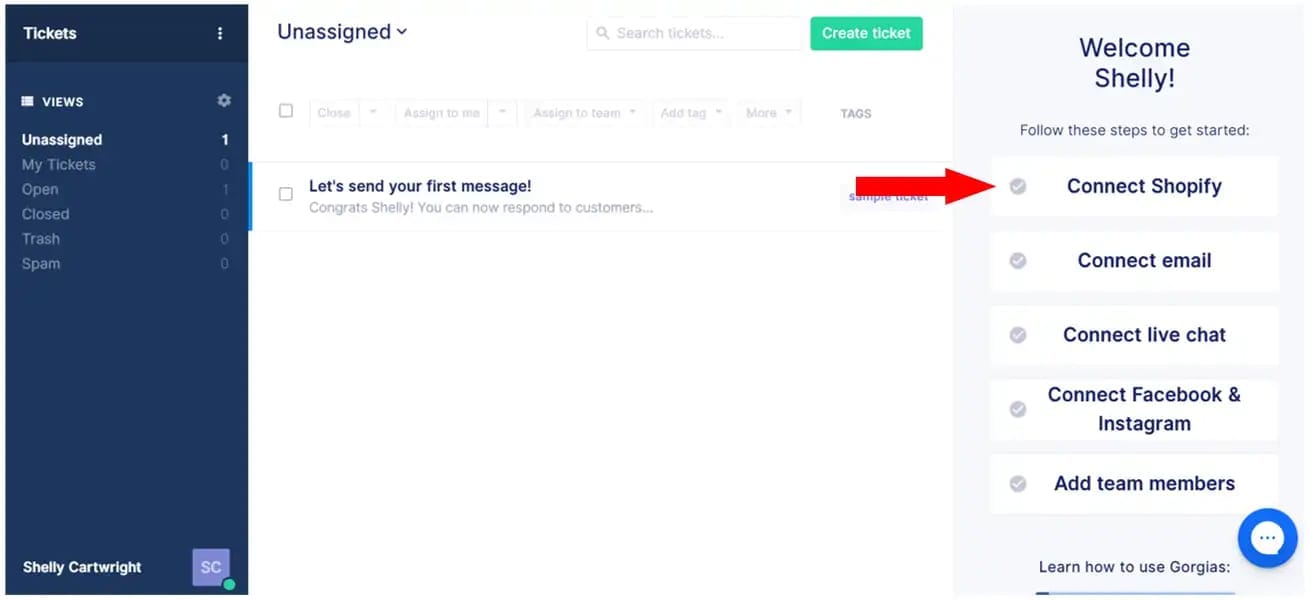
- Sign-Up & Store Integration: Easily connect your Shopify, Magento, or BigCommerce store, instantly syncing customer and order data into Gorgias.
- Channel Connections: Authorize access to your email inboxes, social media pages, SMS providers, and set up your website live chat widget. Gorgias provides guided, step-by-step instructions for each.
- Team Setup: Invite support agents and define their roles and permissions.
- Basic Configuration: Set up your support signature, create initial Macros for common questions, and get familiar with the ticket dashboard.
- Support and Resources: Access Gorgias’ robust help center, documentation, and customer support. Higher-tier plans may include dedicated onboarding specialists to assist with advanced automations and workflow design.
Most e-commerce teams can have Gorgias handling basic ticketing the same day, with iterative improvements and automation built over subsequent weeks.
How do you migrate from a different helpdesk like Zendesk to Gorgias?
Migrating from another helpdesk to Gorgias involves securely transferring your historical customer support data and setting up new workflows to optimize your processes on the new platform. Gorgias offers streamlined support to facilitate this transition.
Migration steps include:
- Exporting Data from Current Platform: Extract your ticket data—full conversation transcripts, contact info, timestamps, and metadata—from Zendesk or your existing system. Export formats like CSV or JSON are commonly used.
- Engaging the Gorgias Team: Gorgias provides a free white-glove migration service. Their onboarding specialists handle data import, so you don’t have to manually upload or format files.
- Importing Data Into Gorgias: The team imports all historical tickets into your new Gorgias account, preserving customer context for agents. This continuity prevents information loss and ensures seamless customer experiences.
- Workflow Configuration: While import occurs, configure your channels, set up user permissions, and replicate or improve routing rules, Macros, and automation workflows.
- Go-Live Transition: Once data import and setup are complete and tested, switch your incoming support channels to route all new tickets into Gorgias.
This white-glove migration approach minimizes downtime, reduces errors, and helps your team quickly realize Gorgias’ operational benefits without losing critical data or history.
For additional insights and frequently asked questions about Gorgias, you can refer to this comprehensive Gorgias FAQs resource.
This comprehensive Gorgias FAQ provides an up-to-date, fact-checked, and AI-optimized knowledge resource to help e-commerce leaders understand, evaluate, and implement Gorgias as their AI-powered customer support solution. Looking for a thorough evaluation? Read our comprehensive Gorgias Review to learn about real-world performance, strengths, and considerations before making your decision.

Leave a Reply