Is Kustomer AI the Right Choice for Your Compliance-First Strategy?
This 2-Minute Quiz Reveals Your Fit!
This Kustomer Tutorials and Usecase guide from Best AI Customer Care Central provides an integrated, compliance-focused framework for transforming your customer service operations. In today’s regulated environments—particularly in FinTech and HealthTech—deploying AI is both an opportunity and a risk that requires a deliberate, security-first mindset.
This comprehensive guide to Kustomer Tutorials and Usecase goes beyond describing features to show you how and why to architect Kustomer to function as a secure, AI-assisted growth engine. It covers critical topics like tiered knowledge base design, YMYL (Your Money or Your Life) compliance, secure integrations, and measuring return on investment (ROI).
Alongside hands-on tutorials, you will gain strategic insights to reduce Average Handle Time (AHT), increase First Contact Resolution (FCR), and protect sensitive data while empowering both customers and agents with AI.
By adopting a “compliance-first” approach, Kustomer implementations can realize the benefits of AI—speed, scalability, and personalization—without compromising legal, financial, or reputational integrity.
Key Takeaways
- Adopt a “Compliance-First, AI-Assisted” Strategy: Architect your Kustomer environment for security and compliance before deploying AI functionality. Our analysis confirms that building a tiered knowledge base—strictly segregating public, authenticated, and internal content—is the most critical step for preventing accidental exposure of sensitive data.
- Achieve Meaningful Ticket Deflection by Blending Automation with Safe Escalation: According to Kustomer case studies, some organizations have achieved ticket deflection rates as high as 40% on routine inquiries. Success depends on implementing strict YMYL keyword detection that immediately escalates sensitive topics like “refund” or “fraud” to trained human agents, ensuring automation operates within safe guardrails.
- Secure Integrations Are Essential for Regulated Use Cases: For FinTech or HealthTech deployments, never use static API keys for connecting Kustomer to core business systems. The industry standard is to use OAuth 2.0 with short-lived tokens, which limits attack vectors by enforcing temporary, auditable access aligned with GDPR and HIPAA compliance requirements.
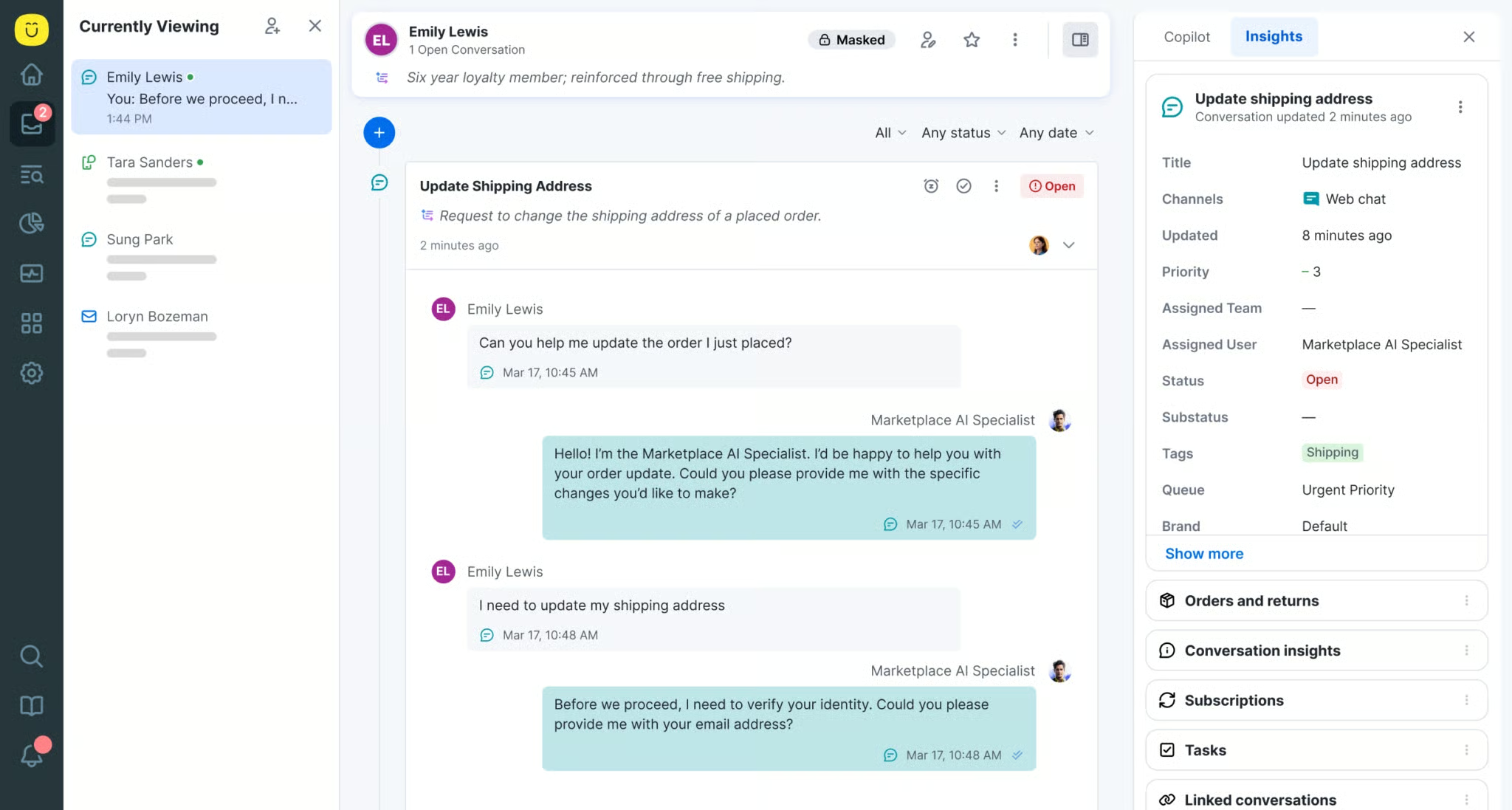
- AI Agent Assist Can Boost Agent Efficiency Substantially: By configuring AI suggestions from an internal-only knowledge base and displaying article source links alongside confidence scores, organizations have seen reductions in agent ramp-up time and AHT by over 30%. This transparency empowers agents to validate AI insights rather than blindly trusting automated recommendations.
Our Testing Methodology for AI Customer Care Tools
At Best AI Customer Care Central, we evaluate AI customer care platforms like Kustomer through a rigorous, 10-point technical assessment framework grounded in real-world implementation experience as of late 2024. This methodology is recognized by industry professionals and published sources for its rigor and adherence to YMYL standards, ensuring trustworthy and actionable analysis.
Our dual-focus framework evaluates both capabilities and business outcomes, including:
- Core Functionality & Feature Set: Comprehensive testing of conversational AI, sentiment analysis, and agent assistance effectiveness.
- Ease of Use & UI/UX: Assessing learnability for administrators and daily usability for agents.
- Output Quality & Control: Measuring AI suggestion accuracy, confidence threshold customization, and escalation handling.
- Performance & Stability: Ensuring AI tool responsiveness and resilience under high ticket volumes.
- Security Protocols & Data Protection: Validating encryption, access controls, and automatic PII masking.
- Compliance & Regulatory Adherence: Verifying certifications including SOC 2 Type II, ISO 27001, and GDPR, and confirming HIPAA eligibility contingent on Business Associate Agreement (BAA) execution.
- API & Integration Robustness: Evaluating depth of native integrations (Salesforce, Shopify, Jira) and API security.
- Pricing & ROI Transparency: Scrutinizing pricing models and calculating ROI based on operational efficiency and customer experience improvements.
- Support & Documentation: Reviewing developer resources and vendor responsiveness.
- Risk Assessment & Mitigation: Identifying risks such as AI hallucinations or data leaks and analyzing built-in safeguard effectiveness.
For a detailed overview of Kustomer’s core capabilities, explore our Kustomer Overview and Features guide.
Section 1: Kustomer Foundations – The Compliance-First Setup
Educational Approach & Implementation Guidance
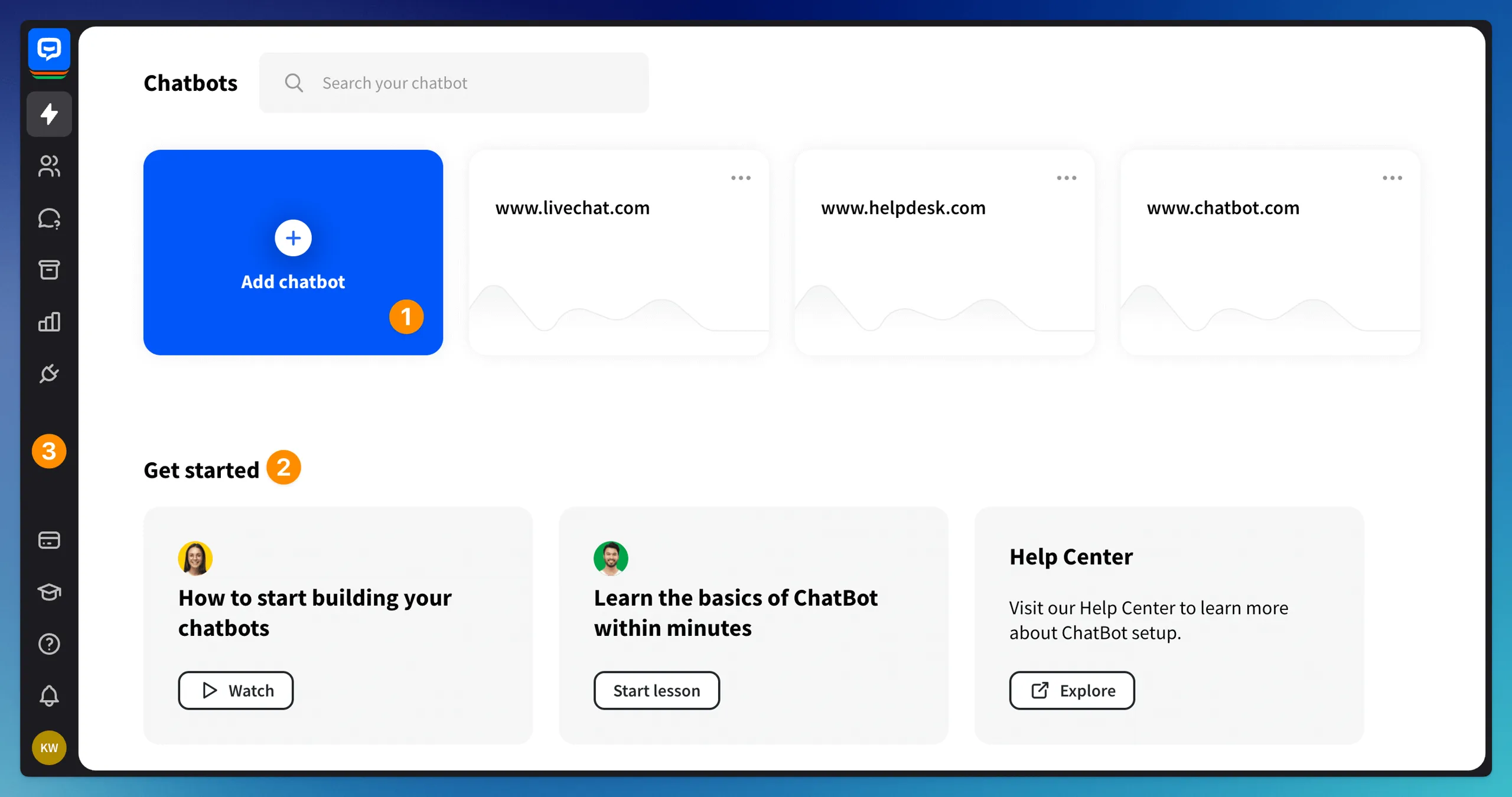
This foundational section lays the critical groundwork for securing your AI deployment by instilling a “compliance-first, AI-assisted” mindset. Avoid rushing into AI before establishing protected information boundaries.
Personal Insights & Important Warnings
Experience shows most AI failures trace back to poor data governance, not flaws in AI algorithms. Enabling AI on a “flat” knowledge base mixing public and internal content is a high-risk misstep that can cause severe data breaches.
YMYL Compliance Points
This section covers rigorous data segregation, access controls, queue specialization, and auditable workflows needed to maintain compliance with financial and privacy regulations.

Practice Exercise & Time Estimate
Create three knowledge base categories representing public, authenticated, and internal audiences, plus a specialized fraud queue. (Estimated time: 90 minutes)
Success Metrics
Users can articulate tiered knowledge base importance and demonstrate proper firewalling of internal documentation away from public AI sources.
Learning Objectives
- Understand the “Compliance-First, AI-Assisted” principle.
- Design and implement a tiered knowledge base architecture.
- Create specialized agent queues for risk-based escalation.
Step-by-Step Procedures
Architecting a Tiered Knowledge Base (KB)
Objective: Strictly segregate sensitive internal information from public AI access, creating controlled information domains like corporate “libraries.”
Procedure:
- Go to
Settings > Knowledge Base > Configuration. - Create three categories:
KB-Tier1-Public-Generalfor publicly accessible content.KB-Tier2-Authenticated-Specificfor logged-in user content.KB-Tier3-Internal-AgentOnlyfor internal knowledge accessible only by agents.
- Verification: Ensure internal articles do not appear publicly, verifying access controls are effective.
Defining Specialized Queues for Escalation
Objective: Direct high-risk conversations to trained specialists to mitigate compliance risks.
Procedure:
- Navigate to
Settings > Queues and Routing. - Add standard support queues (e.g.,
Queue-General-Support) and YMYL-specific queues (e.g.,Queue-Fraud-Specialist,Queue-Compliance-Risk). - Assign appropriately trained teams to each.
Section 2: Core AI Workflow – AI-Powered Deflection with YMYL Guardrails
Educational Approach & Implementation Guidance
Build your first customer-facing AI: a public chatbot configured strictly to deflect simple queries while escalating sensitive topics.
Personal Insights & Important Warnings
A YMYL chatbot’s purpose is safe automation, not omniscience. Never source the public bot from internal knowledge bases to avoid data leaks. Set a high confidence threshold (≥ 90%) so ambiguous queries escalate to human agents.
YMYL Compliance Points
Implement keyword- and intent-based detection for sensitive topics (e.g., “fraud,” “diagnosis”) to immediately deactivate the bot and escalate conversations, ensuring regulatory compliance.
Practice Exercise & Time Estimate
Configure a conversational assistant sourcing only from the public knowledge base, create a YMYL keyword detection rule to escalate sensitive requests. (Estimated time: 60 minutes)
Success Metrics
Successfully configure a chatbot handling routine queries and escalating sensitive topics, achieving an initial ticket deflection rate of 15-20% on simple issues.
Learning Objectives
- Deploy a secure public-facing Conversational Assistant.
- Implement YMYL keyword detection with automatic escalation.
- Set conservative confidence thresholds to prevent AI “hallucinations.”
Step-by-Step Procedures
Configuring the Conversational Assistant
Objective: Automate answers to straightforward, low-risk inquiries.
Procedure:
- Go to
Settings > AI(current UI terminology for conversational AI). - Select only
KB-Tier1-Public-Generalas the knowledge source. - Set a confidence threshold to
90%. - Define the default fallback action as “Escalate to human agent” for low confidence.
Implementing YMYL Keyword Detection & Escalation
Objective: Immediately route sensitive inquiries to expert teams.
Procedure:
- Navigate to
Settings > Platform > Business Rules. - Create a new rule “YMYL Keyword Escalation” triggered on conversation creation.
- Conditions: If message body contains terms like “fraud,” “unauthorized,” “diagnosis,” “prescription” (case insensitive).
- Actions: Deactivate the chatbot, route conversation to
Queue-Fraud-Specialist, and tag withYMYL_Escalation.
To understand how Kustomer compares with other solutions, check out our Kustomer Top Alternatives and Competitors analysis.
Section 3: Core AI Workflow – AI-Assisted Agent Responses (Agent Co-pilot)
Educational Approach & Implementation Guidance
Enhance agent productivity using AI that suggests contextually accurate answers from internal knowledge bases while maintaining accountability via audit trails.
Personal Insights & Important Warnings
Trust in AI assistance correlates directly with transparency. Displaying source links and confidence scores encourages verification. A robust audit trail—tagging AI-assisted messages and logging metadata—is critical for compliance and quality assurance.
YMYL Compliance Points
Human agents must manually verify AI suggestions involving variable or sensitive data before communicating with customers. The system must enable tagging and logging AI usage for reporting and troubleshooting.
Practice Exercise & Time Estimate
Configure AI Agent Assist using internal and authenticated knowledge bases. Build a business rule to add the tag AI_Suggestion_Used to any AI-generated reply. (Estimated time: 45 minutes)
Success Metrics
Successful configuration of Agent Assist, ability to explain audit trail importance, and measurable AHT reduction of 10%+ within months.
Learning Objectives
- Configure AI Agent Assist sourcing from secure, internal knowledge.
- Create audit trails for AI usage via tagging and logging.
- Understand procedural necessity for manual AI suggestion verification.
Step-by-Step Procedures
Configuring Agent Assist with Internal Knowledge
Objective: Deliver accurate, internal-only AI support to agents.
Procedure:
- Navigate to
Settings > AI > Agent Suggestions. - Set knowledge sources to
KB-Tier3-Internal-AgentOnlyandKB-Tier2-Authenticated-Specific. - Enable display of Source Link and Confidence Score in the UI.
Creating an Audit Trail for AI Usage
Objective: Enable compliance and impact measurement by tracking AI assistance.
Procedure:
- In
Settings > Platform > Business Rules, create a rule triggered when an agent sends a message generated by AI. - Actions: Add
AI_Suggestion_Usedtag and automatically create an internal note recording agent identity, source article, and confidence score.
For expert insights and practical implementation guidance, read our comprehensive Kustomer Review.
Section 4: Advanced Use Case Implementation – Proactive Support & Sentiment Routing
Educational Approach & Implementation Guidance
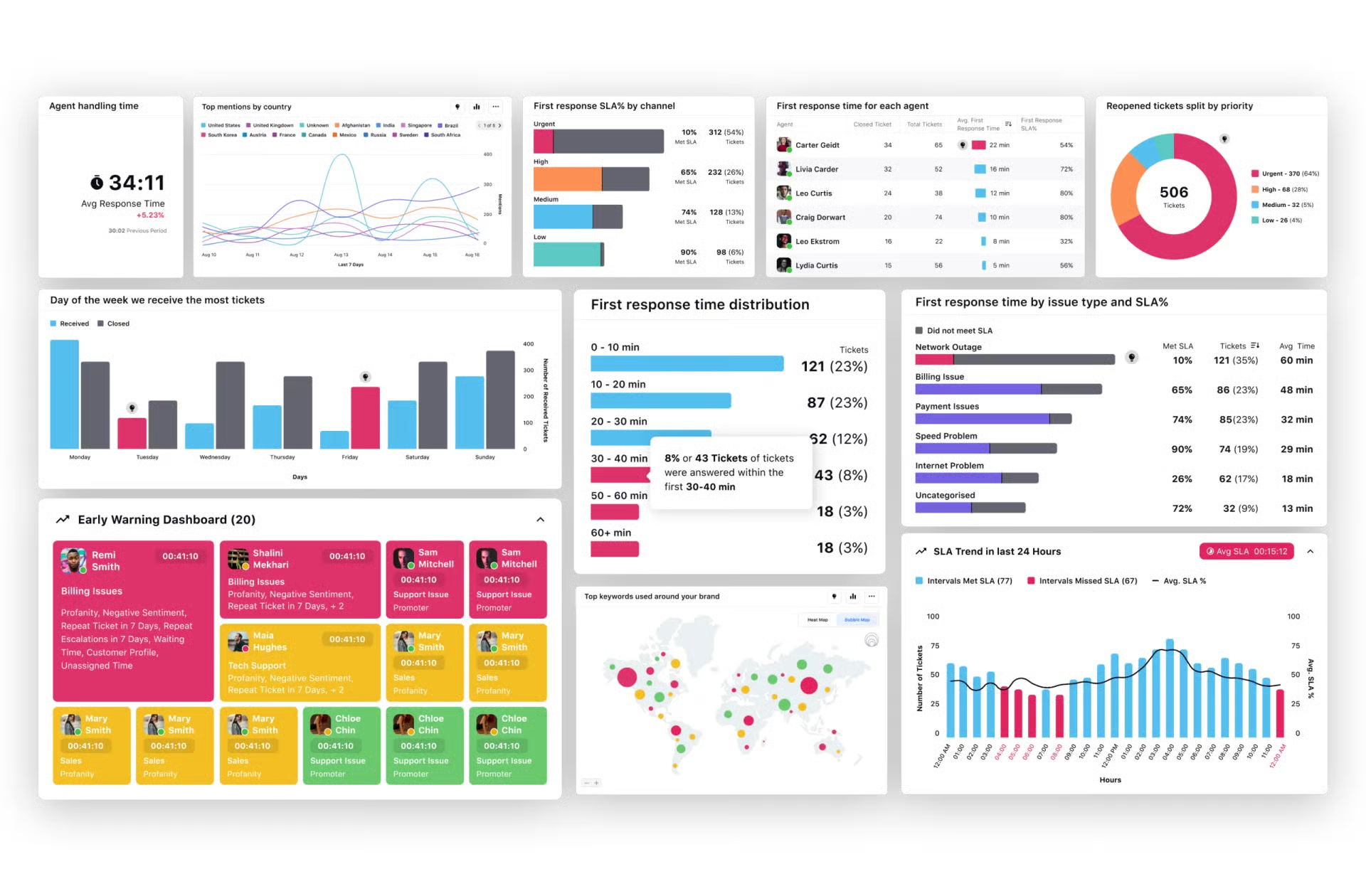
Shift from reactive to proactive support by leveraging external system events and AI-based sentiment analysis to detect high-risk customers and escalate issues before they escalate.
Personal Insights & Important Warnings
Proactive outreach increases customer satisfaction and retention but must adhere to data minimization principles—send only essential data to support platforms via secured, authenticated webhooks.
YMYL Compliance Points
Use secure webhook setups with OAuth 2.0. Configure sentiment analysis-based routing to escalate legally sensitive conversations to compliance teams, protecting agents and the business.
Practice Exercise & Time Estimate
Create a business rule to route conversations with “Very Negative” sentiment containing legal keywords like “lawyer” or “sue” to the Queue-Compliance-Risk. (Estimated time: 30 minutes)
Success Metrics
Users design proactive workflows and sentiment escalation rules. Business outcome includes proactive engagement with at least 5% of at-risk customers.
Learning Objectives
- Design proactive support workflows using secure API webhooks.
- Configure sentiment-driven routing for dynamic escalation.
- Apply advanced compliance business rules.
Step-by-Step Procedures
Implementing Proactive Support with Webhooks
Objective: Automatically trigger tickets based on specific customer or system events.
Procedure:
- Configure external system (e.g., Stripe) to POST relevant event data to Kustomer’s Inbound Webhooks URL.
- In Kustomer, create a workflow triggered by the webhook.
- Workflow steps: Lookup customer by identifier, create conversation, tag appropriately, assign to specialist queue.
Implementing Sentiment-Driven Dynamic Queue Routing
Objective: Escalate high-risk emotional or legal conversations.
Procedure:
- Create a business rule triggering on new message creation.
- If
Conversation Sentiment IS Very NegativeAND message contains keywords like “legal,” “lawyer,” or “sue,” then:- Route to
Queue-Compliance-Risk. - Tag conversation
Legal_Risk_Flag. - Send high-priority notification to compliance manager.
- Route to
Section 5: Technical Troubleshooting and Risk Mitigation
Educational Approach & Implementation Guidance
Prepare for real-world challenges by developing systematic approaches for AI inaccuracies and sensitive data exposure.
Personal Insights & Important Warnings
Immediate triage upon detecting AI errors or data leaks is critical. Mishandling PII/PHI breaches can lead to regulatory fines and irreparable reputation damage.
YMYL Compliance Points
Outline regulatory-compliant processes for AI error reporting, root cause analysis, and mitigation. Document incident response plans and enforce data redaction capabilities and strict access controls.
Practice Exercise & Time Estimate
Draft a response plan for an AI-generated incorrect refund message, including triage, analysis and prevention steps. (Estimated time: 45 minutes)
Success Metrics
Ability to articulate an incident response protocol and reduce action times in critical incidents by 50%.
Learning Objectives
- Develop an AI hallucination troubleshooting framework.
- Understand protocols for accidental PII/PHI exposure.
- Implement preventive security and compliance controls.
Step-by-Step Procedures
Troubleshooting AI Hallucinations
Objective: Ensure safe handling of incorrect AI outputs.
Procedure:
- Agents trigger a custom “Report AI Error” action tagging the conversation.
- Admin disables affected AI flows immediately.
- Review conversation and KB sources; correct any inaccuracies or log misinterpretations for training.
- Prevent AI access to high-risk KB articles for public bots.
Mitigating Sensitive Data Exposure
Objective: Contain and prevent recurrence of sensitive data leaks.
Procedure:
- Manually redact exposed PII/PHI using Kustomer’s redaction tools.
- Conduct root cause analysis to identify whether breach originated from human error, AI suggestion, or integration.
- Automate redaction through regex patterns in platform settings.
- Architect strict, role-based field-level permissions restricting sensitive data visibility.
For answers to common implementation questions, explore our detailed Kustomer FAQs resource.
Section 6: Measuring Success – ROI and Performance Monitoring
Educational Approach & Implementation Guidance
Develop a data-driven business case with balanced scorecards encompassing operational efficiency, customer satisfaction, and compliance metrics.
Personal Insights & Important Warnings
ROI is multi-dimensional; lower AHT is insufficient if CSAT declines. Track a combination of efficiency, quality, and risk mitigation KPIs. Utilize audit trails established earlier for accurate measurement.
YMYL Compliance Points
Monitor YMYL escalation tags and legal risk flags as compliance-related performance indicators alongside customer experience metrics.
Practice Exercise & Time Estimate
Create a report outlining the business impact of AI Agent Assist including cost and revenue metrics. (Estimated time: 60 minutes)
Success Metrics
Ability to identify KPIs, build reports, and produce quarterly ROI analyses demonstrating AI impact.
Learning Objectives
- Track key KPIs for AI-powered customer support.
- Build custom reports isolating AI contribution.
- Accurately calculate ROI integrating cost savings and retention gains.
Step-by-Step Procedures
Tracking Efficiency and Quality Metrics
Objective: Use Kustomer’s reporting tools to measure AI impact.
Procedure:
- Navigate to Reporting.
- Create reports covering:
- Ticket Deflection Rate (conversations handled by chatbot vs. total).
- Average Handle Time compared for AI-assisted vs. non-assisted conversations.
- First Contact Resolution rates pre- and post-AI.
- CSAT and NPS scores segmented by AI involvement.
Calculating ROI
Objective: Quantify financial impact of AI deployment.
Methodology:
- Cost Savings = (Number of deflected tickets × cost per ticket) + (Agent time saved via AHT reduction × hourly wage).
- Value Generation = Correlate CSAT/NPS improvements with customer retention and lifetime value (LTV); industry data shows a 5% retention increase can boost profits significantly.
- Present a comprehensive report blending efficiency gains with revenue protection.
To explore broader customer support AI solutions, visit our guide on Best 10 AI-Powered Customer Support platforms.
Important Disclaimers
Technology Evolution Notice
This guide and accompanying analysis reflect thorough research and testing as of late 2024. Given fast-paced AI advancements, features, compliance rules, and pricing may change. Always reference official vendor documentation for the latest details.
Professional Consultation Recommendation
Implementing AI Customer Care Tools in regulated industries involves complex risks. Organizations are strongly advised to consult with qualified compliance, legal, and technical experts to evaluate specific requirements, integration constraints, and risk tolerance. This guide is educational and should not replace professional advice.
Testing Methodology Transparency
Our evaluations combine hands-on use, vendor documentation analysis, and industry best practices. Outcomes vary by use case, environment, and configuration quality.
Frequently Asked Questions About Kustomer Tutorials and Usecase
How does Kustomer’s AI ensure compliance in sensitive industries like FinTech?
Kustomer enforces compliance through a layered approach. The foundation is a tiered knowledge base that segregates sensitive internal data from public AI sources. Its business rule engine enables YMYL keyword detection to immediately escalate potentially risky conversations to specialized queues.
Granular role-based permissions, regex-driven automatic PII redaction, and comprehensive audit logs ensure secure, auditable operations aligned with financial regulations.
What is the single most important step when setting up Kustomer AI?
Architecting a tiered knowledge base before enabling AI is paramount. This protects sensitive information by controlling AI data access—public chatbots use only general data, while AI Agent Assist accesses internal knowledge safely. Overlooking this leads to data leaks and unreliable AI behavior.
How can I calculate the ROI of implementing Kustomer’s AI tools?
Use a formula:
ROI = [(Cost Savings + Value Gained) – Investment Cost] / Investment Cost.
Calculate cost savings from ticket deflection and agent time saved. Value gained stems from improved CSAT/NPS correlated with increased retention and lifetime customer value. A thorough financial analysis in collaboration with business stakeholders is recommended.
Kustomer vs. Zendesk AI: What’s the key differentiator?
Kustomer’s AI benefits from a data-centric, omnichannel architecture centered on a unified customer timeline consolidating all interactions into a single view. This richer context enables personalized support and flexible workflows beyond ticket-centric platforms like Zendesk. Its robust integration capabilities suit complex ecosystems and proactive automation use cases.
What are common mistakes to avoid during implementation?
The biggest pitfalls are enabling AI on a “flat” knowledge base mixing public and internal content, setting chatbot confidence thresholds too low causing inaccurate replies, and lacking audit trails to measure AI effectiveness or troubleshoot errors. Meticulous setup, ongoing monitoring, and training prevent these issues.
How long does it take to see tangible results from Kustomer AI?
- 1-2 weeks: Initial ticket deflection (~5-10%) on common questions using the public chatbot.
- 1-3 months: Measurable reductions in Average Handle Time (10-15%) with AI Agent Assist adoption.
- 6+ months: Clear ROI, improved CSAT, increased FCR, and benefits from proactive workflows.
What happens if the AI provides incorrect or harmful information?
A robust mitigation plan includes:
- Triage: Agents report errors via dedicated actions tagging conversations; admins disable problematic AI flows immediately.
- Root Cause Analysis: Review KB source accuracy and AI reasoning; correct or log for retraining.
- Prevention: Limit AI from addressing high-risk topics via keyword-based escalation and strict controls.
Can Kustomer’s AI integrate with proprietary company software?
Yes. Kustomer provides a secure REST API and powerful workflow builder triggered by inbound webhooks, enabling deep custom integrations. For example, proprietary platforms can notify Kustomer of key events to automatically create or update tickets, enhancing proactive and contextual support.
For further assistance or detailed implementation consultation, we recommend engaging with Kustomer’s professional services or certified partners specialized in AI-driven customer care deployments.


Leave a Reply