Is Tidio the Right AI Customer Support Tool for Your Business?
Take This 2-Minute Quiz to Find Out!
Key Takeaways
- AI-Powered Automation: Tidio’s Lyro AI uses LLM technology to handle complex customer conversations naturally, going beyond simple rule-based chatbots
- Free Plan Value: Genuine free tier with 50 live chat and 50 AI conversations monthly, plus 3 operator seats for small teams
- E-commerce Focus: Deep Shopify integration transforms customer support into a sales-enabling function with real-time order data
- SMB Positioning: Strategically targets small-to-medium businesses with accessible pricing and ease of use, differentiating from enterprise solutions
- Measurable ROI: Comprehensive analytics enable tracking of cost savings, efficiency improvements, and revenue generation from AI automation
What is Tidio and how does its conversational AI actually work?
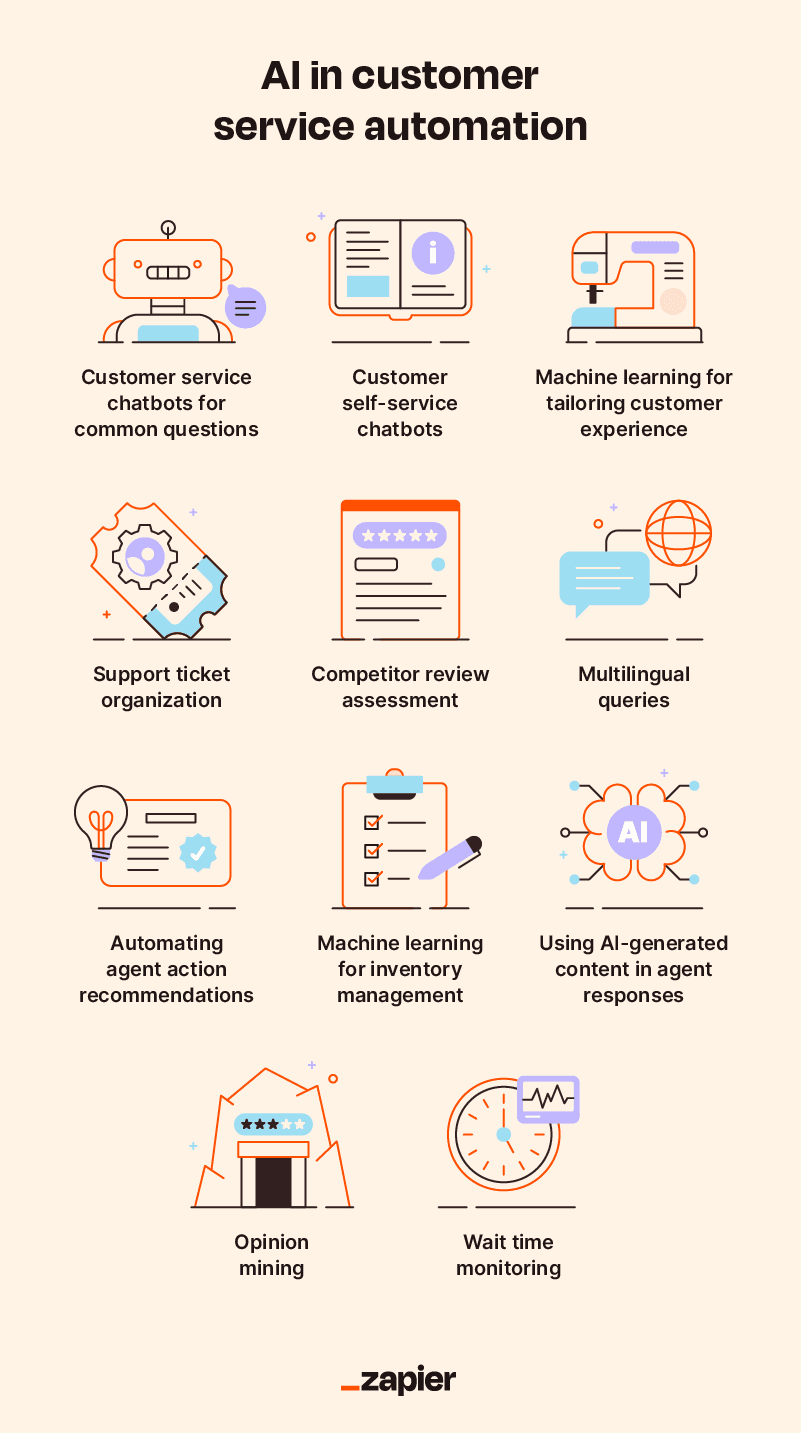
Tidio is an AI-powered customer service platform designed to help small and medium-sized businesses engage with their customers through live chat, chatbots, and a shared inbox. While it offers traditional live chat capabilities, its core competitive advantage comes from Lyro, its proprietary conversational AI that transforms customer support from a reactive cost center into a proactive, efficient business asset.
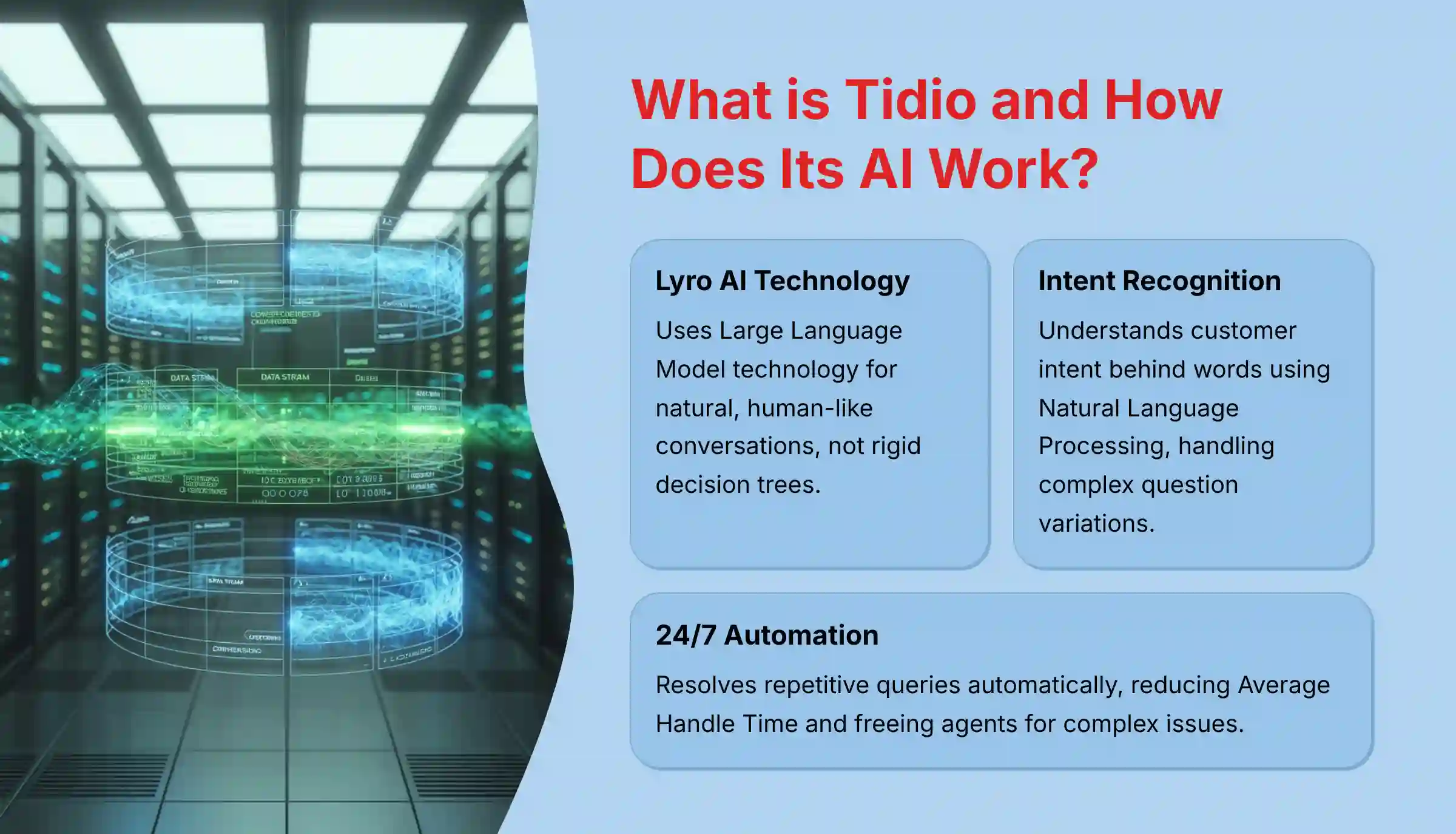
Unlike older, rule-based chatbots that follow rigid decision trees, Lyro uses Large Language Model (LLM) technology to provide natural, human-like conversations. The AI works by first being “trained” on your existing knowledge base—you can feed it your website’s FAQ page, help articles, or any collection of questions and answers. When a customer asks a question through the chat widget, Lyro uses Natural Language Processing (NLP) to understand the intent behind the words, not just keywords.
This sophisticated approach allows Lyro to handle complex variations of the same question. For example, whether a customer asks “Where’s my package?”, “When will my order arrive?”, or “I haven’t received my shipment,” Lyro recognizes these as the same underlying intent and provides the appropriate response. This process enables the AI to automatically resolve a significant portion of repetitive customer queries 24/7, reducing Average Handle Time (AHT) and freeing up human agents to focus on complex, high-value interactions that require empathy and problem-solving skills.
Is Tidio truly free and what are the real limitations of the free plan?
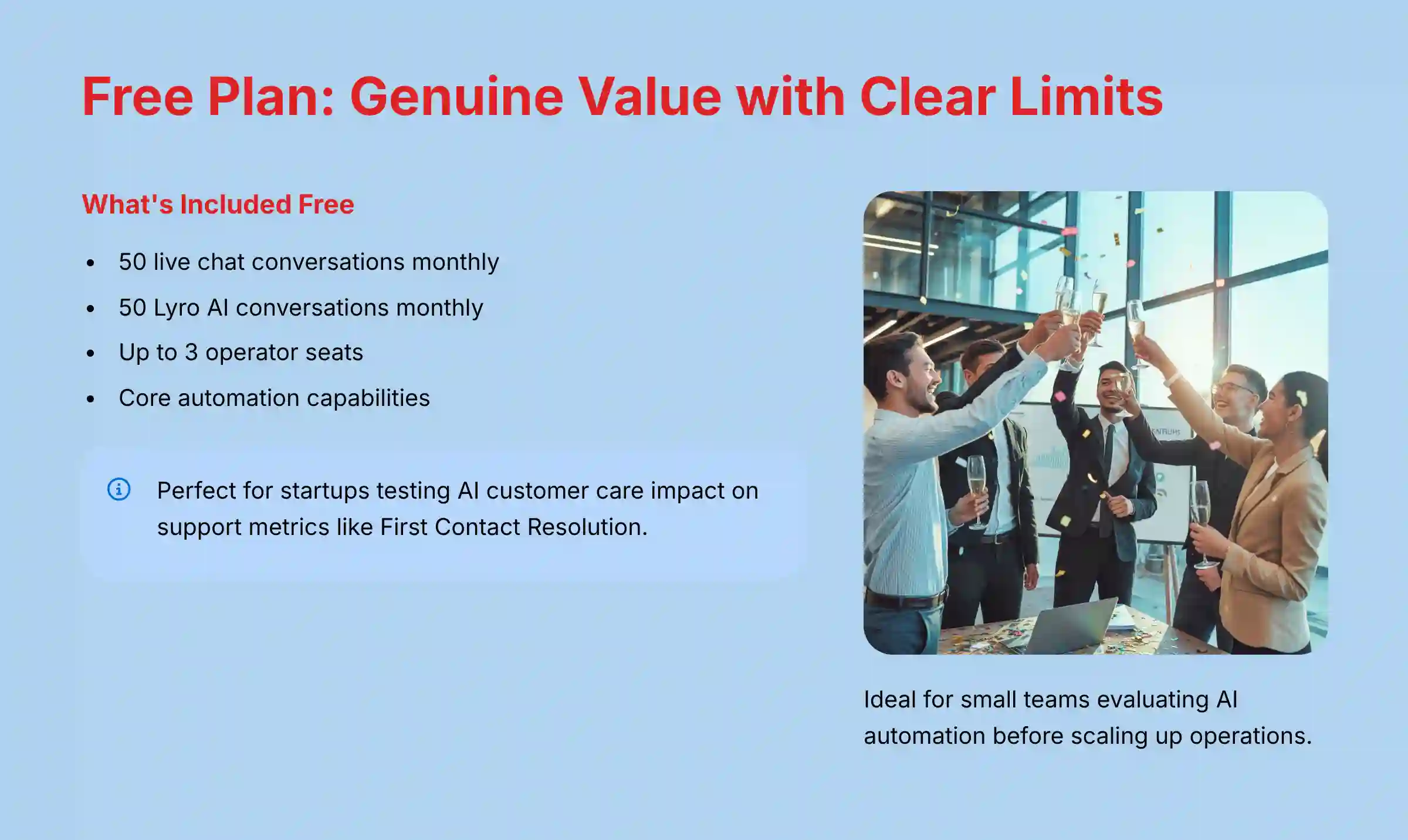
Yes, Tidio offers a genuinely free plan that’s not a limited-time trial, making it particularly attractive for startups and small businesses entering the AI customer care space. The free plan provides core functionalities that allow businesses to test live chat and basic automation capabilities. However, understanding its limitations is crucial for setting realistic expectations about scalability.
The primary limitations of the free plan include:
- Live Chat Conversations: Limited to 50 unique live chat conversations per month. Once exceeded, the chat widget remains visible, but new visitors cannot start conversations with live agents.
- AI (Lyro) Conversations: Only 50 Lyro AI conversations per month. This quota is often consumed quickly, especially on sites with moderate traffic, limiting the AI’s ability to handle automated inquiries.
- Operator Seats: Up to 3 operator seats, allowing a small team of three agents to be logged in simultaneously—a significant advantage for small support teams.
- Advanced Features: Limited access to features like detailed visitor insights, advanced integrations, and comprehensive analytics.
For businesses in the AI customer care space, the free plan serves best as an extended evaluation period to test core functionality and measure initial impact on support metrics like First Contact Resolution (FCR). Companies expecting more than a few customer interactions daily will likely need to upgrade to realize the full potential of AI-powered automation and achieve meaningful cost savings in their customer support operations.
For those seeking more comprehensive solutions, our detailed Tidio Overview and Features guide explores advanced capabilities and upgrade paths.
How does Tidio compare to major competitors like Intercom and Zendesk?
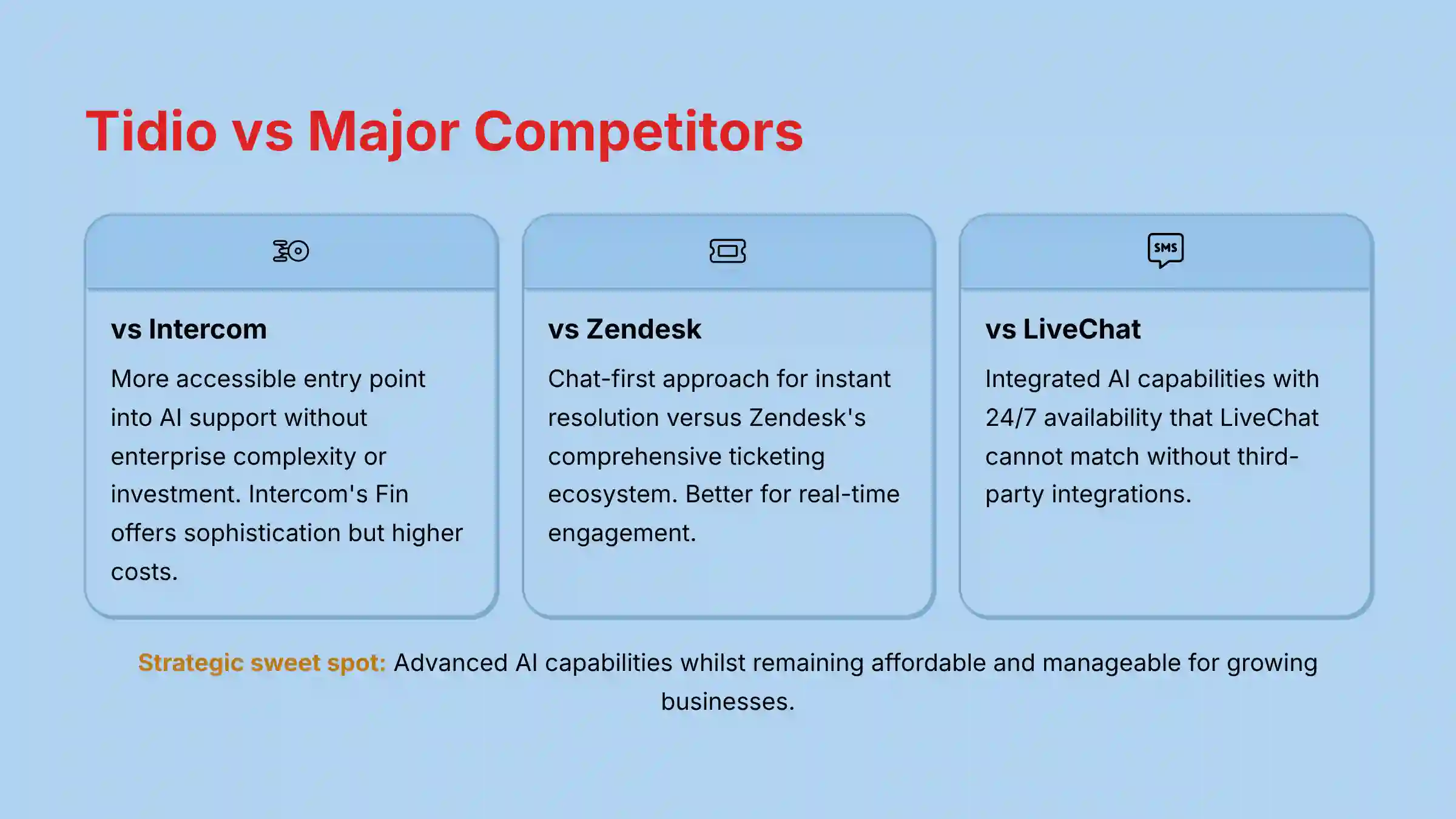
Tidio strategically positions itself in the AI customer care market by focusing on small-to-medium businesses and e-commerce with accessible pricing and ease of use, differentiating from enterprise-focused competitors through three key areas: AI approach, implementation complexity, and pricing structure.
Versus Intercom
- AI Capabilities: Intercom’s Fin offers more sophisticated enterprise-grade AI, while Tidio focuses on accessible AI automation
- Complexity: Intercom has steeper learning curves and higher implementation costs
- Target Market: Tidio provides approachable entry point for SMBs seeking AI automation without enterprise complexity
Versus Zendesk
- Platform Focus: Zendesk operates as comprehensive helpdesk ecosystem; Tidio takes “chat-first” approach
- AI Integration: Zendesk AI integrates deeply into ticketing systems; Tidio focuses on instant chat resolution
- Use Case: Tidio ideal for businesses prioritizing real-time customer engagement over complex ticketing
Versus LiveChat
- AI Advantage: LiveChat excels at traditional chat but lacks integrated AI capabilities
- Automation: Tidio’s Lyro provides 24/7 automated responses without third-party integrations
- Feature Completeness: Tidio offers more comprehensive AI-powered solution in single platform
✅ Tidio’s Competitive Advantages
- More affordable than enterprise solutions
- Easier implementation and management
- Integrated AI without additional complexity
- E-commerce focused features
⚠️ Considerations
- Less sophisticated than enterprise platforms
- Limited advanced integrations
- Smaller feature ecosystem
- May not scale for large enterprises
Tidio occupies a strategic sweet spot in the AI customer care landscape: offering more advanced AI capabilities than basic chat tools while remaining more affordable and manageable than enterprise solutions, making it particularly effective for e-commerce and growing businesses seeking to implement AI customer support without extensive technical resources.
For a comprehensive comparison analysis, explore our in-depth Tidio Top Alternatives and Competitors review.
How does Tidio integrate with e-commerce platforms like Shopify?
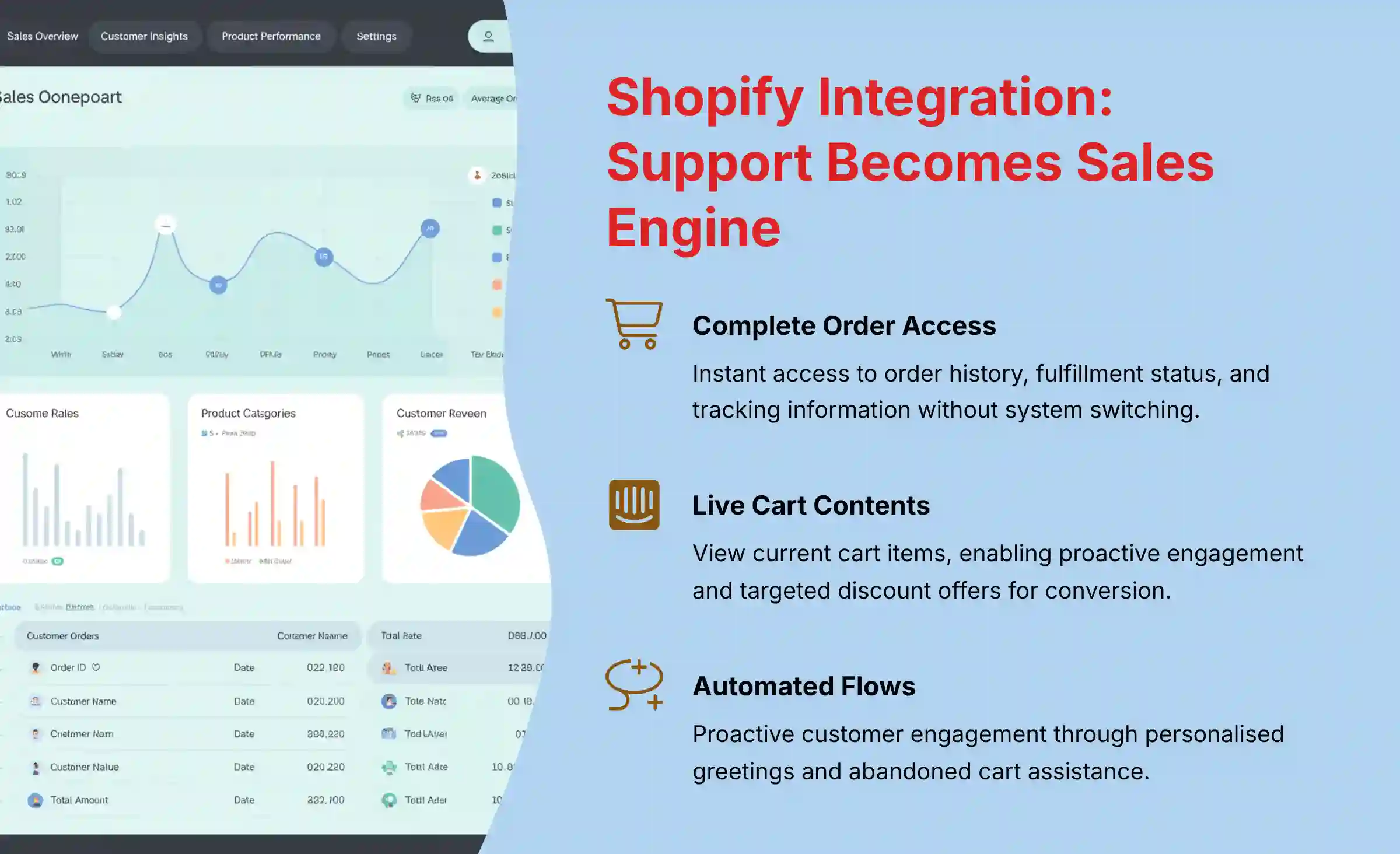
Tidio’s Shopify integration represents one of its most compelling features for e-commerce businesses, offering deep connectivity that transforms customer support from a cost center into a sales-enabling function. This integration goes far beyond surface-level connections, providing comprehensive customer data access directly within the support interface.
Once connected, the integration automatically pulls critical customer information from your Shopify store and displays it alongside chat conversations:
- Complete Order History: Agents can instantly access past orders, including order numbers, fulfillment status, and real-time tracking information, eliminating the need to switch between systems.
- Live Cart Contents: View items currently in a customer’s shopping cart, enabling proactive engagement such as offering targeted discounts to encourage purchase completion.
- Customer Profiles: Synchronized contact information, purchase history, and total spending provide valuable context for personalizing interactions.
The integration’s true power emerges through Tidio’s automated “Flows,” which leverage this data for proactive customer engagement. For example, you can create chatbots that automatically detect returning customers and provide personalized greetings, or design flows that proactively offer assistance to visitors with abandoned carts exceeding specific time thresholds.
This capability transforms traditional reactive support into a proactive revenue generator. Support agents can identify upselling opportunities, provide order status updates without manual lookups, and resolve shipping inquiries instantly. The result is significantly reduced Average Handle Time (AHT), improved First Contact Resolution (FCR) rates, and enhanced customer satisfaction scores—all while potentially increasing conversion rates through timely, contextual engagement.
For practical implementation guidance, check our comprehensive Tidio Tutorials and Usecase resource.
How do you train the Tidio Lyro AI with your own business data?
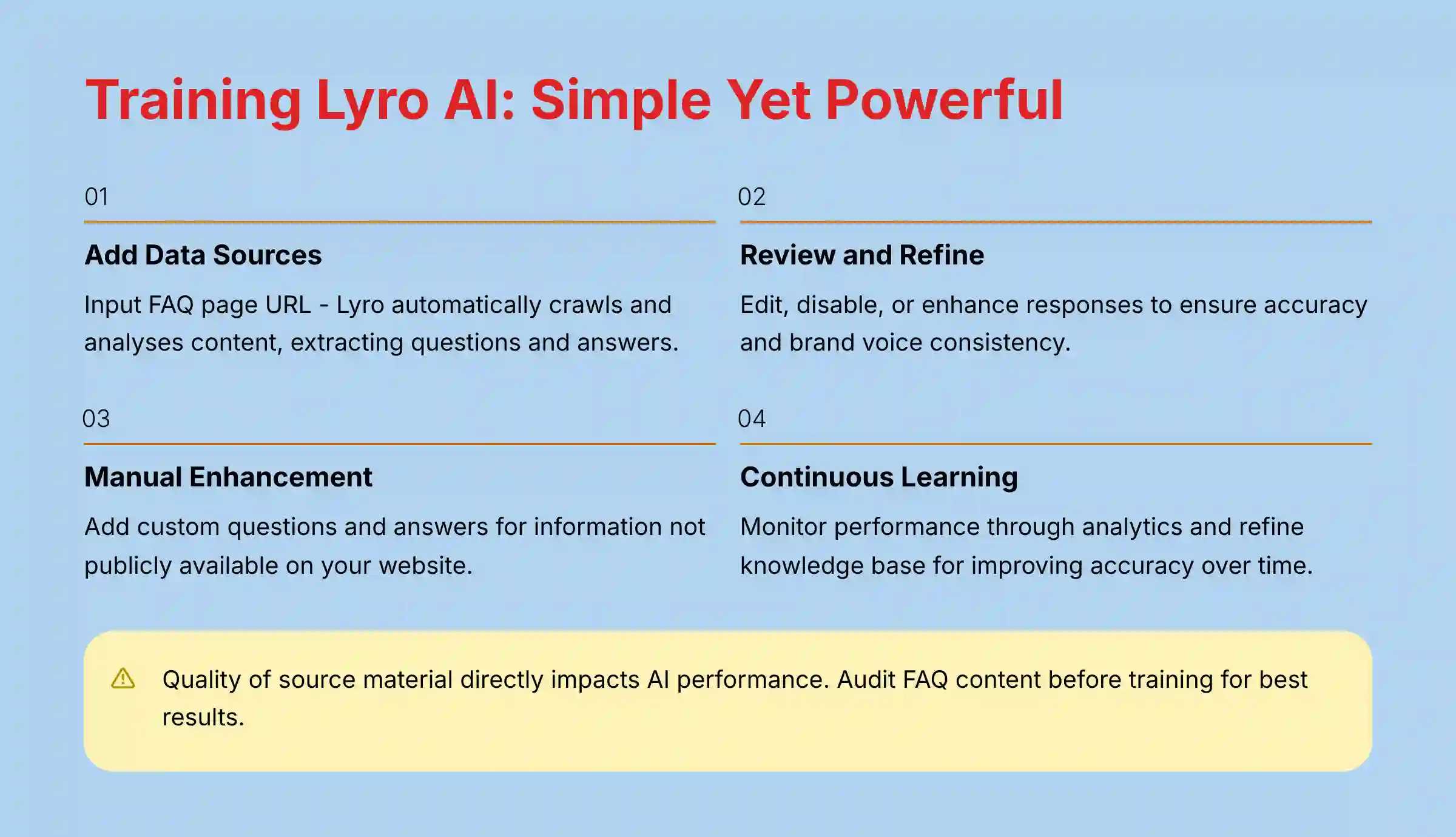
Training Tidio’s Lyro AI is designed for accessibility, allowing non-technical users to create sophisticated AI customer support without requiring programming expertise. The process centers on feeding Lyro your existing knowledge base, typically through your website’s FAQ page URL, which serves as the AI’s primary information source for customer interactions.
The training process involves several straightforward steps:
- Access Knowledge Management: Navigate to the Lyro section within your Tidio dashboard and select the knowledge management option.
- Add Data Sources: Input your FAQ page URL, and Lyro will automatically crawl and analyze the content, extracting questions and answers.
- Review and Refine: Lyro displays all learned Q&As, allowing you to edit, disable, or enhance specific responses to ensure accuracy and brand voice consistency.
- Manual Enhancement: Add information not publicly available on your website by creating custom questions and answers directly in the interface.
Critical Success Factor: The quality of your source material directly impacts AI performance. Before training Lyro, audit your FAQ content to ensure each question is clear, distinct, and paired with concise, self-contained answers. Avoid vague questions or lengthy, multi-part responses that could confuse the AI’s understanding.
Once trained, Lyro continuously learns from interactions. Monitor performance through analytics to identify areas where the AI struggles, then refine your knowledge base accordingly. This iterative approach ensures improving accuracy over time, ultimately leading to higher customer satisfaction and increased automation rates that reduce support costs while maintaining service quality.
Is Tidio secure and GDPR compliant for handling customer data?
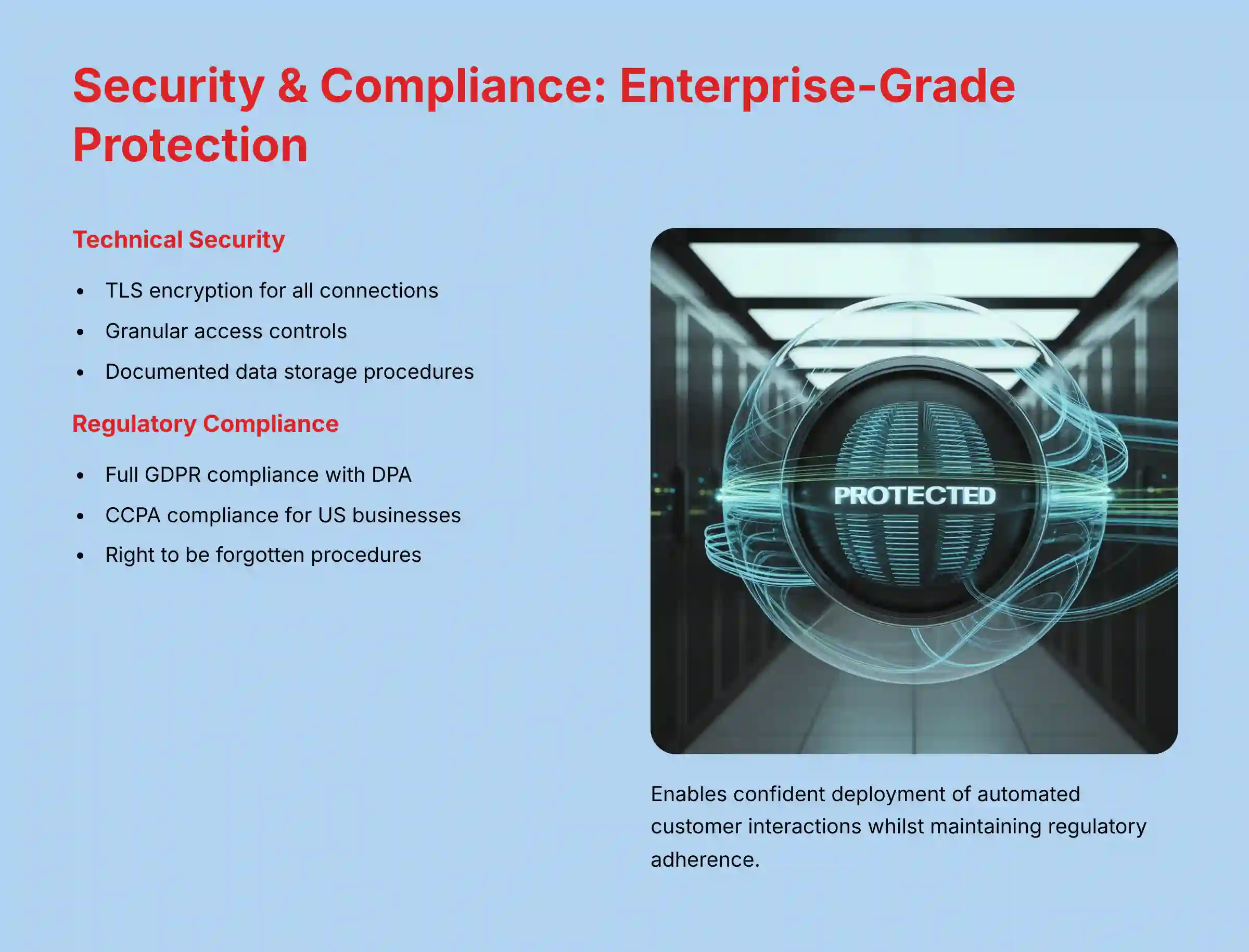
Data security and regulatory compliance are paramount concerns for any AI customer care platform, and Tidio addresses these requirements through comprehensive security measures and formal compliance certifications. For businesses operating globally or serving European customers, understanding these protections is essential for maintaining customer trust and avoiding regulatory penalties.
Tidio ensures security and compliance through multiple layers:
Technical Security Measures:
- Data Encryption: All connections utilize TLS encryption, securing data transmission between customers, agents, and Tidio’s servers
- Access Controls: Granular permission management allows administrators to restrict agent access to only necessary customer data
- Data Storage: Clearly defined data storage locations with documented procedures for handling data subject requests
Regulatory Compliance:
- GDPR Compliance: Full compliance with European data protection regulations, including Data Processing Agreements (DPA) that legally outline responsibilities and rights regarding personal data processing
- CCPA Compliance: Addresses California Consumer Privacy Act requirements for US-based businesses
- Right to Be Forgotten: Established procedures for handling data deletion requests and customer access requests
Ongoing Responsibilities: While Tidio provides compliant infrastructure, businesses must implement proper procedures including obtaining user consent for chat interactions, maintaining transparent privacy policies, and ensuring internal data handling practices align with regulatory requirements.
For AI customer care implementations, this compliance framework enables businesses to confidently deploy automated customer interactions while maintaining regulatory adherence. Regular security audits and compliance updates ensure continued protection as regulations evolve, making Tidio suitable for businesses requiring strict data protection standards.
How does the handoff from Lyro AI to human agents work?
The AI-to-human handoff represents one of the most critical workflows in AI customer care, and Tidio’s implementation ensures seamless transitions that maintain customer satisfaction while optimizing agent efficiency. Poor handoffs can frustrate customers and waste the efficiency gains from AI automation, making this functionality essential for successful AI customer support deployment.
Tidio enables handoffs through multiple trigger mechanisms:
Customer-Initiated Handoffs: Lyro recognizes explicit requests for human assistance through phrases like “speak to a person,” “human agent please,” or “connect me with support.” The AI immediately ceases automated responses and routes the conversation to the live agent queue.
Automated Escalation Triggers: Configure intelligent escalation rules within Tidio’s Flow builder:
- Sentiment Detection: Automatically escalate conversations when customers express frustration or negative sentiment
- Complexity Recognition: Transfer chats when customers ask multiple follow-up questions, indicating the issue exceeds AI capabilities
- VIP Customer Rules: Prioritize high-value customers for immediate human attention based on Shopify integration data
Contextual Continuity: When agents receive escalated conversations, they access complete chat transcripts and customer data, eliminating the need for customers to repeat information. This context preservation ensures smooth continuation and demonstrates professionalism.
Proactive Monitoring: Advanced users can monitor live AI conversations and manually intervene using the “take over” feature when they identify opportunities for human intervention, creating a “human-in-the-loop” approach that maximizes both efficiency and customer satisfaction.
This sophisticated handoff system ensures that AI handles routine inquiries while complex, emotional, or high-value interactions receive appropriate human attention, optimizing both operational efficiency and customer experience outcomes.
For detailed implementation strategies, visit our Tidio FAQs section for additional workflow guidance.
What are the real limitations of Tidio’s Lyro AI and when should you avoid using it?
Understanding Lyro AI’s limitations is crucial for setting realistic expectations and designing effective AI customer care workflows. While powerful for automating routine inquiries, Lyro operates within specific parameters that determine its appropriate use cases versus situations requiring human intervention.
Core Limitations:
Lyro’s knowledge is strictly confined to provided training data and cannot “think” beyond its knowledge base. It cannot perform reasoning, access external systems beyond core integrations, or handle complex multi-step problem-solving that requires contextual understanding and creative solutions.
Avoid Using Lyro For:
- Highly Emotional Situations: Frustrated customers, security incident reports, or sensitive financial matters require human empathy and judgment. AI responses can appear dismissive and damage customer relationships.
- Complex Troubleshooting: Issues requiring back-and-forth diagnosis, screenshot analysis, or understanding unique user configurations exceed AI capabilities.
- High-Value Sales Interactions: While Lyro can qualify leads, serious B2B inquiries or high-value customer conversations need human relationship-building and negotiation skills.
- Regulatory or Legal Questions: Compliance-related inquiries require human expertise to ensure accurate, legally appropriate responses.
Optimal Strategy: Position Lyro as a frontline filter handling high-volume, low-complexity questions while escalating complex, sensitive, or high-value interactions to human agents. This approach maximizes the AI’s efficiency benefits while ensuring appropriate human attention for situations requiring expertise, empathy, or strategic thinking.
Performance Monitoring: Regularly review AI conversation logs to identify patterns where Lyro struggles, then refine training data or adjust escalation triggers. The goal isn’t 100% AI resolution but rather optimal resource allocation that improves overall support efficiency while maintaining high customer satisfaction scores.
For comprehensive evaluation criteria, explore our detailed Tidio Review analysis.
How can I measure the ROI of implementing Tidio in my business?
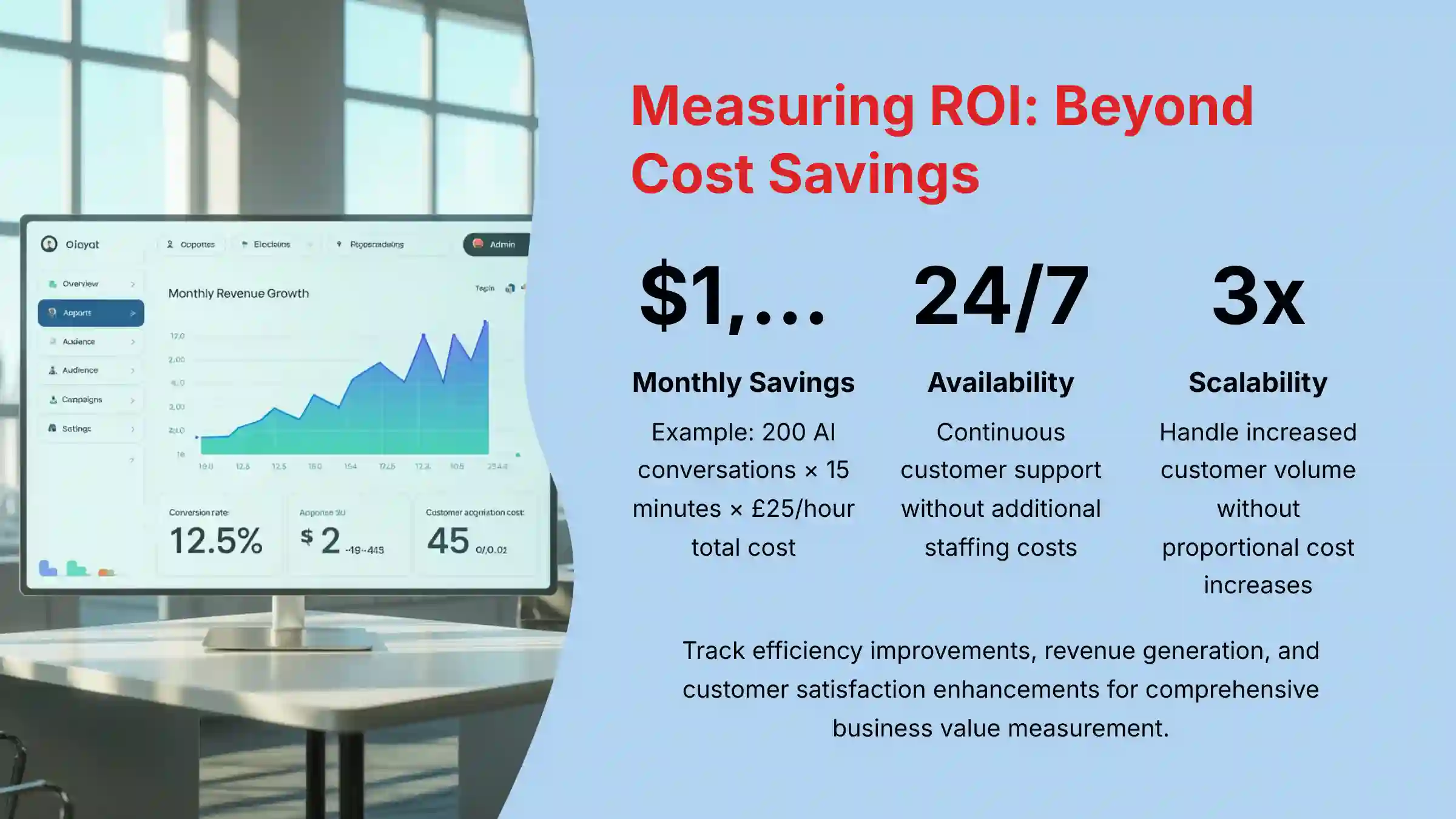
Measuring Tidio’s Return on Investment requires comprehensive analysis beyond simple cost savings, encompassing efficiency improvements, revenue generation, and customer satisfaction enhancements. Tidio’s built-in analytics provide the data foundation for calculating meaningful ROI metrics that demonstrate business value.
Key ROI Measurement Areas:
1. Direct Cost Savings Through Automation:
Track successful AI conversations in Lyro analytics and multiply by your average cost per support ticket (including agent wages and overhead). This calculation reveals direct labor cost savings from automation. For example, if Lyro handles 200 inquiries monthly that would otherwise require 15 minutes of agent time at $25/hour total cost, monthly savings equal $1,250.
2. Agent Efficiency Improvements:
Monitor changes in Average Handle Time (AHT) and First Contact Resolution (FCR) for human-handled conversations. Tidio’s integrated customer data and response tools enable faster resolution times, allowing existing teams to handle increased volumes without additional hiring.
3. Revenue Generation and Lead Capture:
Utilize analytics to track leads captured through chatbot interactions (email addresses, contact forms) and e-commerce integration data showing chat-influenced purchases. Assign monetary values to leads and completed sales directly attributable to Tidio’s presence.
4. Customer Satisfaction Impact:
Deploy post-chat satisfaction surveys through Tidio to monitor CSAT scores over time. Research consistently demonstrates that higher customer satisfaction correlates with increased customer lifetime value (LTV) and reduced churn rates.
5. Operational Scalability:
Calculate the customer volume increase your team can handle with AI support versus traditional methods, providing a clear metric for growth capacity without proportional cost increases.
These measurements collectively demonstrate how Tidio functions not merely as a support tool but as a comprehensive growth engine that reduces costs while improving customer experience and enabling business scalability.
To explore the complete ecosystem of AI-powered customer support solutions, visit our comprehensive guide to the Best 10 AI-Powered Customer Support platforms.

Leave a Reply