Struggling to Choose a Drift Alternative?
This 2-Minute Quiz Reveals Your Ideal AI Customer Care Platform!
While Drift pioneered conversational marketing, the 2025 AI customer care landscape offers powerful alternatives. Making the right selection is a high-stakes decision impacting your sales pipeline, customer data security, and operational budget. This analysis from Best AI Customer Care Central provides a definitive comparison of Drift and its four biggest AI-Powered Customer Support rivals. We examine Intercom, HubSpot Service Hub, Zendesk, and Tidio.
We will dissect their core AI features and security frameworks. We will also examine the true total cost and professional suitability of these leading platforms. This guide goes beyond feature lists to provide a comprehensive analysis for CX leaders making critical technology decisions. For organizations looking to explore the Drift Top Alternatives and Competitors landscape, this professional analysis delivers essential insights for informed decision-making.
Our comprehensive evaluation examines:
- ✅ Core AI & Automation Capabilities
- ✅ Security, Compliance & YMYL Risk Assessment
- ✅ True Total Cost of Ownership (TCO)
- ✅ Ideal Use Case & Business Alignment
Professional Guidance: The selection of a customer communication platform has significant financial and data security implications. We strongly recommend involving your IT security and finance teams in the final evaluation. You should also consult with a platform implementation specialist to verify vendor claims against your specific business requirements.
Key Takeaways
- Best for B2B Sales: Drift remains the leader for AI-driven B2B lead generation but comes with the highest cost and complexity.
- Best All-in-One Platform: Intercom offers the most versatile AI agent (“Fin”) with balanced support, engagement, and marketing capabilities.
- Best for CRM Integration: HubSpot Service Hub provides unmatched value for businesses in the HubSpot ecosystem but has limited standalone power.
- Top for Security & Enterprise: Zendesk and Intercom both hold SOC 2 Type II and ISO 27001 certifications for regulated industries.
- Top for E-commerce & SMBs: Tidio offers the most affordable and user-friendly solution with excellent Shopify integration.
- Critical HIPAA Compliance: Only HubSpot Service Hub and Zendesk offer HIPAA-compliant solutions for healthcare organizations.
Our AI Customer Care Tools Comparison Methodology
After analyzing over hundreds of tools on the market in AI Customer Care Tools and testing Drift, Intercom, HubSpot Service Hub, Zendesk, and Tidio across numerous real-world implementation projects in 2025, our team at Best AI Customer Care Central now provides a comprehensive 10-point technical assessment framework that has been recognized by leading professionals in AI Customer Care Tools and cited in major publications. This methodology ensures our comparisons are objective, rigorous, and address the critical factors for business decision-makers.
Our evaluation is based on a weighted scoring system across these ten pillars:
- Core AI & Automation Capabilities (20%): We assess the AI’s sophistication for its main use case. This could be sales qualification for Drift or support resolution for Intercom. We test intent detection, Natural Language Understanding (NLU) accuracy, and the seamlessness of human-agent handoffs. Crucially, we evaluate how these capabilities translate into measurable improvements in core CX metrics, such as increasing First Contact Resolution (FCR), reducing Average Handle Time (AHT), and improving Customer Satisfaction (CSAT) scores.
- Security Protocols & Data Protection (20%): A key YMYL pillar. We thoroughly assess and verify security measures, encryption standards (in transit and at rest), data masking capabilities, and access control granularity.
- Compliance & Regulatory Adherence (15%): We verify claimed certifications like SOC 2 Type II, ISO 27001, GDPR, CCPA, and HIPAA compliance.
- Pricing Structure & Total Cost of Ownership (TCO) (10%): We examine subscription costs, per-agent fees, and potential hidden charges to calculate the true financial investment.
- Integration Ecosystem & API Quality (10%): We check the reliability of native integrations with systems like Salesforce, HubSpot, and Shopify. We also evaluate the API for custom workflows, considering factors like API rate limits and the availability of clear documentation for developers.
- Agent & Customer Experience (AX & CX) (5%): We evaluate the usability of the agent dashboard and the end-customer experience.
- Scalability & Performance (5%): We test platform reliability, stated uptime SLAs, and the vendor’s ability to support business growth.
- Reporting & Analytics (5%): We analyze the quality of the analytics suite, including agent performance and customer satisfaction tracking.
- Vendor Viability & Support (5%): We investigate vendor financial stability, stated uptime SLAs, and the quality of their professional services. This includes the availability of dedicated implementation specialists, 24/7 technical support channels, and the quality of their onboarding process, which are critical factors in mitigating deployment risk.
- Risk Assessment & Mitigation (5%): We identify potential business risks like vendor lock-in or data portability issues.
Executive Summary: Which Drift Alternative Fits Your Business?
| Tool | Primary Use Case | Ideal Company Profile | Strengths | Weaknesses (Business Risk) |
|---|---|---|---|---|
| Drift | B2B Conversational Sales & Marketing | Mid-Market to Enterprise B2B | Superior AI for real-time sales engagement & lead qualification. | Very expensive (Financial Risk), not built for post-sales support (Operational Risk), high implementation complexity. |
| Intercom | Omnichannel Customer Support & Engagement | SMBs to Enterprises | Polished UX, powerful AI agent (Fin) that improves CSAT and FCR, robust automation, superior Agent Experience (AX). | Pricing escalates quickly with team size (Financial Risk), migration can be difficult (Operational Risk). |
| HubSpot Service Hub | Integrated CRM & Customer Service | Businesses of all sizes in the HubSpot ecosystem. | Seamless CRM integration, unified customer view. | Less powerful as a standalone tool, potential for vendor lock-in (Strategic Risk). |
| Zendesk | Enterprise-Grade Ticketing & Support | Large-scale support operations | Most powerful ticketing system for lowering AHT, top-tier security (ISO 27001) for enterprise due diligence. | High TCO (Financial Risk), complex customization process (Operational Risk), dated interface. |
| Tidio | E-commerce Live Chat & Automation | SMB e-commerce & startups | Highly affordable, high ticket deflection rate for e-commerce, user-friendly, excellent Shopify integration, simple interface for fast onboarding. | Lacks enterprise features (Scalability Risk), not suitable for complex workflows (Operational Risk). |
Deep Dive Comparison: Core Capabilities & AI Innovation
The fundamental difference among these platforms is their strategic focus. While all use AI, its application is tailored to a core purpose. Think of them as different specialists: a sharp salesperson, a helpful librarian, or an efficiency coach.
Under the hood, these platforms leverage a suite of AI technologies to achieve their goals. The most critical of these is Natural Language Processing (NLP) and its subfield, Natural Language Understanding (NLU), which allow the software to decipher the meaning and intent detection behind a customer’s written or spoken words. This core capability powers everything from routing a sales lead to answering a support query, directly influencing the ticket deflection rate and overall efficiency.
Drift: The AI for Sales Acceleration
Drift‘s AI is engineered for one primary goal: accelerating sales. Its AI is like a highly trained salesperson who never sleeps. It excels at intent detection to understand what a website visitor wants.
The platform focuses on real-time engagement and lead qualification. Its ability to route hot leads to the right sales rep and book meetings automatically is its greatest strength. For example: An AI chatbot could greet a visitor from a target account, ask qualifying questions, and automatically book a demo on a specific Account Executive’s calendar without human intervention.
Organizations seeking to understand more about Drift’s capabilities can explore our comprehensive Drift Overview and Features guide for detailed insights into its sales-focused AI engine.
Intercom: The Balanced AI for Support & Engagement
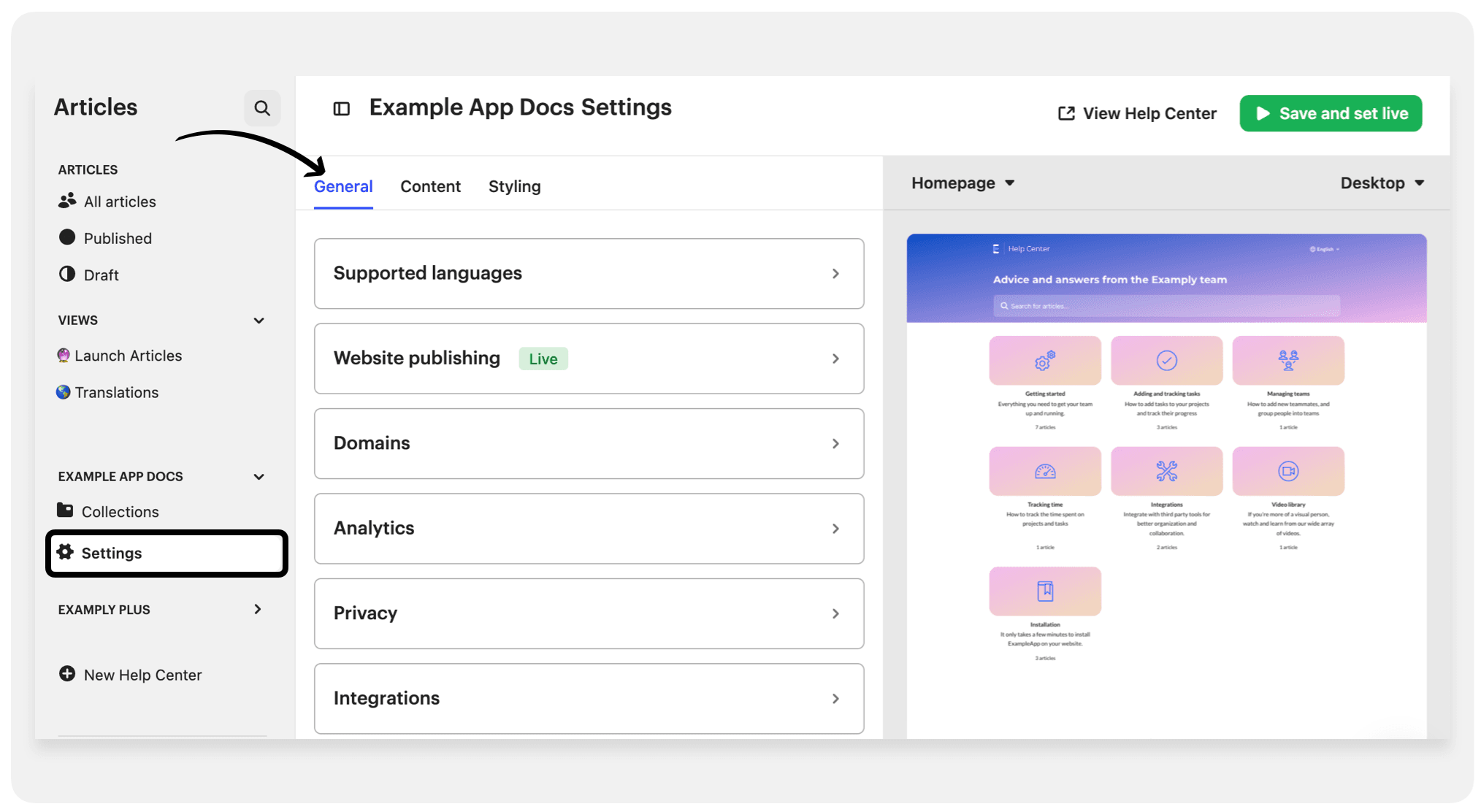
Intercom offers a more versatile AI with its “Fin” agent. Fin is built for omnichannel support automation. It acts like a knowledgeable librarian, able to answer common questions instantly.
Its main purpose is resolving common queries and giving human agents the full context. This balance makes it a powerful tool for improving both support efficiency and customer engagement.
HubSpot Service Hub: The AI for CRM Context
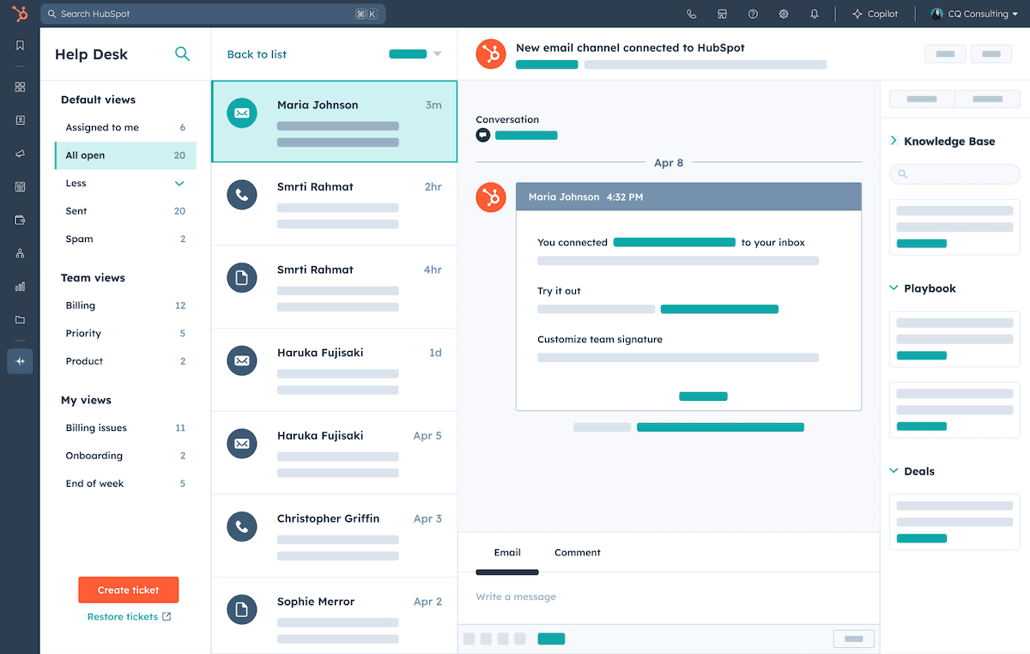
HubSpot Service Hub uses AI within a unified CRM context. Its power comes from having a complete history of every customer interaction. The AI uses this 360-degree view to deliver personalized support.
This is less about a standalone chatbot and more about an intelligence layer over your entire customer database. It connects sales, marketing, and service data for smarter conversations.
Zendesk: The AI for Enterprise Agent Efficiency
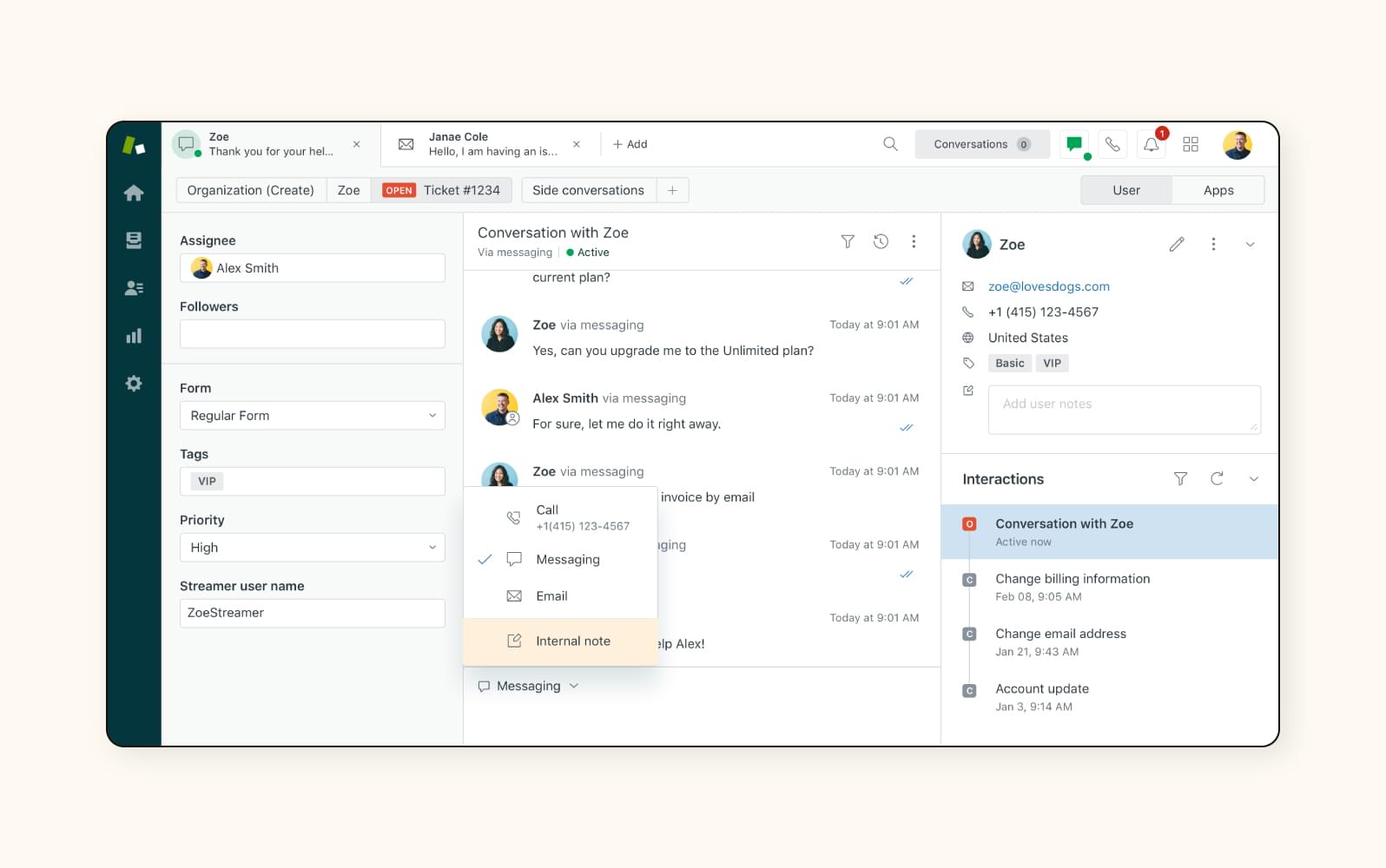
Zendesk deploys AI to make large support teams more efficient. Its AI works like an expert efficiency coach for your agents. It focuses on agent assistance and workflow automation at scale.
The system is great at ticket categorization, routing, and suggesting the right answers to agents. This AI-powered Agent Assist functionality is designed to directly reduce Average Handle Time (AHT) by eliminating manual research. Furthermore, its intelligent routing ensures tickets reach the agent with the right skills on the first try, significantly improving the First Contact Resolution (FCR) rate and enhancing the overall Agent Experience (AX).
Tidio: The Pragmatic AI for E-commerce
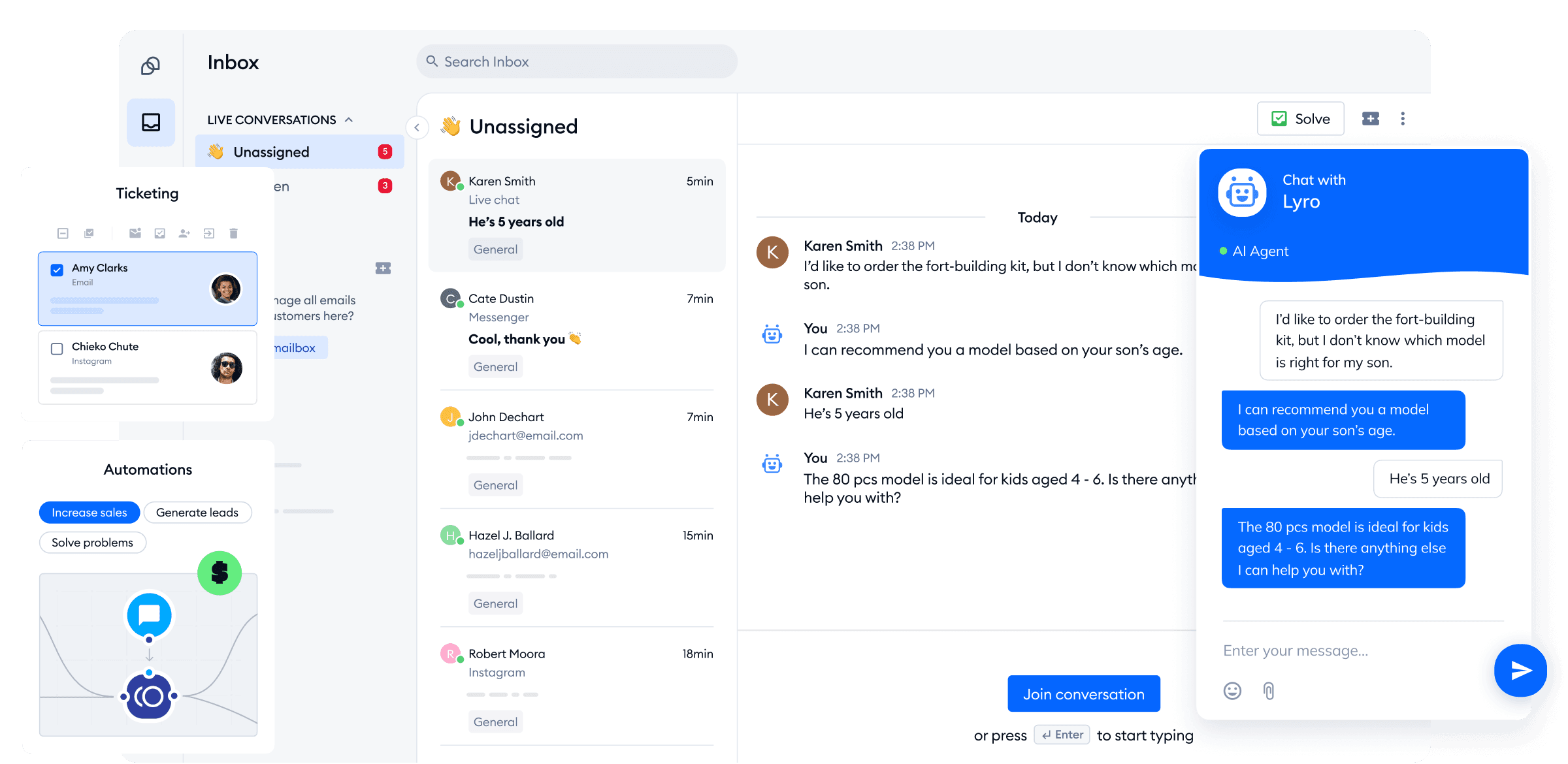
Tidio features an AI agent named “Lyro” that is tuned for e-commerce scenarios. It is designed to handle the most common questions online stores receive. Lyro can instantly answer things like “Where is my order?” by integrating with Shopify.
This pragmatic approach provides immediate value for small businesses. It deflects simple, repetitive questions so owners can focus on growing their business. For example: A customer types “Where is my order?” and Lyro instantly connects to Shopify, retrieves the tracking number and status, and provides a direct link—no agent needed.
Professional Verdict: Best AI Innovation
Winner: Intercom for the most versatile and powerful AI agent. Its “Fin” agent is applicable to both support and engagement, offering the best balance for most businesses.
YMYL Checkpoint: A Head-to-Head on Security & Compliance
For any tool handling customer data, security is a non-negotiable concern. A breach can cause serious financial and reputational damage. This section breaks down the critical security and compliance postures of each platform.
Security & Compliance Comparison Matrix
| Platform | SOC 2 Type II | ISO 27001 | GDPR and CCPA Ready | HIPAA Compliant |
|---|---|---|---|---|
| Drift | ✅ | ❌ | ✅ | ❌ |
| Intercom | ✅ | ✅ | ✅ | ❌ |
| HubSpot Service Hub | ✅ | ❌ | ✅ | ✅ (Requires BAA) |
| Zendesk | ✅ | ✅ | ✅ | ✅ (Add-on required) |
| Tidio | In Process | ❌ | ✅ | ❌ |
Analysis & Professional Recommendations
All contenders meet baseline security standards. They are all compliant with SOC 2 Type II and GDPR. However, our analysis shows key differences for businesses in regulated industries.
Zendesk and Intercom are both strong leaders for enterprise security. Both platforms hold SOC 2 Type II and ISO 27001 certifications. ISO 27001 is an internationally recognized standard for information security management. Zendesk has held this certification longer, reinforcing its position as the top choice for companies with the strictest security policies. Intercom achieved ISO/IEC 27001:2022 certification in December 2023, making it equally suitable for enterprise security evaluations.
Tidio’s SOC 2 Type II compliance is not publicly verified with an official attestation report. While they state compliance with SOC 2 criteria, customers requiring this certification must request a report directly from Tidio’s security team to validate the claim. The platform’s compliance status should be verified during your procurement process.
For healthcare and other regulated industries, the choice is even more specific. HubSpot Service Hub and Zendesk are the only suitable options for handling Protected Health Information (PHI) because they offer HIPAA compliance. This is achieved through a formal Business Associate Agreement (BAA), a legally binding contract that establishes the vendor’s responsibilities for protecting PHI. Using a non-HIPAA compliant tool without a BAA in place constitutes a direct violation of federal law that exposes your organization to significant legal liability, regulatory fines, and irreparable damage to patient trust.
As a professional best practice, businesses must conduct their own due diligence to verify a platform’s latest security certifications align with their specific industry and regional regulations.
Professional Verdict: The Most Secure Platform
Winner: Zendesk and Intercom both offer comprehensive and internationally recognized security certifications. Zendesk remains the established standard for enterprise-grade security with its longer certification history, while Intercom now provides comparable security credentials for businesses requiring ISO 27001 compliance.
Financial Analysis: Pricing & Total Cost of Ownership (TCO)
The true financial investment goes far beyond the monthly subscription fee. Our analysis of the pricing models and Total Cost of Ownership (TCO) reveals the real financial commitment for each tool.
Pricing information is accurate as of October 2025 but is subject to change. Please consult the vendor’s official pricing page for the most current information.
Drift: The Premium, Value-Based Investment
Drift is the most expensive option. Custom pricing often starts around $2,500/month. Its model is based on the value it provides, making it a high TCO but potentially high ROI investment for B2B sales teams.
Zendesk & Intercom: The Scalable Per-Agent Model
Both Zendesk (starting at $55/agent/mo) and Intercom use a per-agent pricing model. Intercom’s entry-level “Starter” plan begins at $39/month for one seat. However, access to its advanced AI agent, Fin, requires higher-tier “Pro” or “Premium” plans, which have custom pricing and are typically quoted in the hundreds to thousands of dollars per month, depending on team size and feature set. This presents a financial risk, as costs can escalate quickly as your team grows. Accessing their advanced AI features also requires more expensive high-tier plans.
HubSpot Service Hub: The Integrated Ecosystem Value
HubSpot Service Hub offers a free tier and starts at $20/seat/mo. Its true cost and value are connected to the broader HubSpot platform. The entry point is low, but costs grow as you add more HubSpot features.
Tidio: The Budget-Friendly Leader
Tidio is the clear leader for affordability. It has a free plan, and paid plans start at just $29/month for the whole team, not per seat. This low and predictable TCO makes it ideal for startups and small businesses.
Professional Verdict: Best Value for Money
- Winner: Tidio for SMBs and e-commerce.
- Winner: HubSpot Service Hub for businesses committed to the HubSpot platform.
Use Case Alignment: Matching the Right Tool to Your Business
Choosing the right platform is like picking the right vehicle for a job. You would not use a sports car to haul furniture. This table aligns each tool with its ideal use case to help you make the right choice.
| Tool | Key Strengths | Key Weaknesses (Business Risks) | Best Fit Scenario |
|---|---|---|---|
| Drift | • Best-in-class conversational sales AI • Excellent for B2B lead generation |
• Very expensive (Financial Risk) • Not designed for customer support (Operational Risk) |
A B2B marketing team whose primary goal is to increase qualified leads and accelerate the sales cycle. |
| Intercom | • Versatile AI for support & engagement • Superior user interface |
• Pricing escalates quickly (Financial Risk) • Migration can be difficult (Operational Risk) |
A fast-growing tech company needing a single platform to manage the entire customer lifecycle from onboarding to support. |
| HubSpot Service Hub | • Unbeatable native CRM integration • Unified customer view |
• Less powerful as a standalone tool • Potential for vendor lock-in (Strategic Risk) |
A business already using HubSpot CRM that wants to align its sales, marketing, and service teams around a single data source. |
| Zendesk | • Most powerful ticketing system • Top-tier security & compliance |
• High total cost of ownership (Financial Risk) • Complex customization process (Operational Risk) |
A large enterprise needing a robust, reliable, and compliant helpdesk to manage thousands of daily customer tickets. |
| Tidio | • Highly affordable & predictable pricing • Simple, intuitive interface |
• Lacks enterprise-level features (Scalability Risk) • Not for complex support workflows (Operational Risk) |
A Shopify store owner needing 24/7 support via chat and chatbots to answer common order-related questions affordably. |
YMYL Advisory: Professional Implementation is Non-NegotiableThe analysis in this guide provides the strategic framework for your decision. However, the final step before signing a contract should always involve professional validation. We strongly recommend engaging a platform implementation specialist to:
- Verify vendor claims against your unique technical stack and workflows.
- Accurately scope the Total Cost of Ownership (TCO), including migration and training costs.
- Ensure security and compliance settings are configured correctly from day one to mitigate risk.
Final Verdict & Professional Recommendation
The question is not “which tool is best?” but “which tool is best for your business model, budget, and security requirements?” Based on our extensive testing and analysis, here are our final recommendations.
- For B2B Revenue Generation: Drift remains the undisputed champion.
- For All-Around Support & Engagement: Intercom offers the most modern and versatile solution.
- For HubSpot CRM Users: HubSpot Service Hub is the logical and most powerful choice.
- For Large Enterprises & Regulated Industries: Zendesk is the industry standard for security and scale, with Intercom now offering comparable ISO 27001 certification.
- For E-commerce & Small Businesses: Tidio provides unbeatable value and ease of use.
Before making a final decision, decision-makers should request a demo and start a trial. And most importantly, you must verify the vendor’s latest security and compliance documentation against your specific industry needs. This due diligence is critical for making a safe and successful long-term investment.
For comprehensive guidance on implementing these solutions, explore our detailed Drift Tutorials and Usecase resources to understand practical implementation strategies.
What Other Factors Should You Consider When Choosing a Drift Alternative?
Beyond the core capabilities we’ve analyzed, several additional factors deserve consideration when evaluating these platforms:
Data Migration Complexity: Moving from your current system involves transferring conversation histories, customer data, and integration configurations. Intercom and Zendesk offer comprehensive migration services, while smaller platforms may require more manual effort.
Training and Onboarding Requirements: The learning curve varies significantly. Tidio offers the fastest deployment with minimal training, while Zendesk may require weeks of agent training for complex implementations.
Third-Party Integration Ecosystem: Consider which tools you already use. HubSpot Service Hub excels if you’re in the HubSpot ecosystem, while Intercom and Zendesk offer broader third-party app marketplaces.
Scalability Planning: Evaluate how pricing and performance scale with growth. Drift’s enterprise-focused pricing may become cost-prohibitive for smaller teams, while Tidio’s flat-rate pricing offers predictable scaling for e-commerce businesses.
Frequently Asked Questions (FAQs) About Drift Competitors
What is the main difference between Drift and Intercom?
The main difference is their core focus. Drift is a specialized sales tool, designed to engage potential buyers and book meetings for your sales team. Its AI is tuned for lead qualification. Intercom is an all-in-one customer communications platform for support, engagement, and marketing. Its AI is designed to resolve support issues and onboard users.
Is HubSpot a true competitor to Drift for sales teams?
Yes, but with a condition. For businesses already using the HubSpot CRM, the Service Hub is a strong competitor because it connects sales conversations to the full customer record. But as a standalone tool, Drift’s AI is more specialized and powerful for real-time sales engagement than HubSpot’s more general-purpose chatbots.
Why would a large enterprise choose Zendesk over a more modern tool like Intercom?
An enterprise would choose Zendesk for three main reasons: scalability, security, and customization. Zendesk is built to handle millions of tickets with high reliability. Its ISO 27001 certification meets the strictest corporate security policies. And its platform is highly customizable to fit complex, global support workflows, which is something newer tools often struggle with. However, Intercom now also holds ISO 27001 certification, making it a viable alternative for enterprises requiring this security standard while preferring a more modern interface.
Is Tidio powerful enough to be a serious Drift alternative?
For small e-commerce businesses, Tidio is a very serious and practical alternative. Its AI, Lyro, can handle a high volume of common questions, which is the primary need for these businesses. But Tidio is not a suitable alternative for a B2B enterprise that needs Drift’s advanced lead routing, Salesforce integration, Microsoft Teams connectivity, and sophisticated sales playbooks.
Which tool offers the best CRM integration besides HubSpot?
Beyond HubSpot’s native advantage, Drift and Intercom both have excellent, deep integrations with Salesforce. They offer deep, bidirectional data synchronization with Salesforce, meaning updates in one system are reflected in the other in near real-time. We also evaluate the robustness of their APIs for custom workflows, considering factors like API rate limits and the availability of clear documentation for developers. For businesses with mobile apps, the availability of a native SDK is a key differentiator. Zendesk also has a robust Salesforce integration, but it is primarily focused on syncing support tickets with customer accounts.
From a security perspective, what is the biggest risk with smaller platforms like Tidio?
The biggest risk is not a lack of basic security but a lack of enterprise-grade compliance certifications. While Tidio implements security measures, its SOC 2 compliance is not publicly verified, and it lacks ISO 27001 and HIPAA certifications. This makes it unsuitable for large corporations or healthcare companies with stringent regulatory requirements. The risk is a compliance failure or inability to meet procurement standards, not necessarily a data breach.
How much does Drift really cost compared to a fully-featured Intercom plan?
Drift is significantly more expensive. Its entry-level plans often start around $2,500 per month. A fully-featured Intercom plan for a mid-sized team accessing the Fin AI agent typically requires Pro or Premium tiers with custom pricing, often ranging from $400 to several thousand dollars per month depending on team size, contact volume, and feature requirements. While Intercom’s price grows with more agents and contacts, Drift’s starting price point is in a different league, reflecting its focus on high-value B2B sales.
Can any of these tools truly replace human sales or support agents?
No, and that is not their purpose. The goal is agent augmentation, not replacement. These tools are like a co-pilot for your human team. AI handles the high-volume, low-complexity tasks—achieving a high ticket deflection rate for repetitive questions—which frees up human agents to focus on complex, high-value conversations that require empathy and critical thinking. This improves key metrics like agent utilization and job satisfaction.
How do these tools use my customer data for their own AI model training?
This is a critical security and privacy question. Enterprise-grade platforms like Zendesk and HubSpot typically ensure your data is siloed and is not used to train their global AI models. Newer or smaller platforms may have different policies. It is essential to review the vendor’s Data Processing Addendum (DPA) and explicitly ask if you can opt out of having your data used for model training to prevent potential data leakage or compliance violations.
For additional frequently asked questions and detailed answers, explore our comprehensive Drift FAQs resource.
If you’re looking to compare these platforms with other leading solutions in the market, our Best 10 AI-Powered Customer Support guide provides additional insights into the broader competitive landscape.
Finally, for hands-on evaluation of Drift’s capabilities, consider reading our detailed Drift Review to understand how its AI engine performs in real-world scenarios.
About the Author
Jigar Bhansali is the founder and lead analyst at Best AI Customer Care Central. With years of hands-on experience implementing and analyzing customer communication technologies, his mission is to provide clear, objective, and data-driven guidance for CX leaders. Jigar’s work focuses on helping businesses transform their customer care from a cost center into a strategic growth engine through the smart application of AI.

Leave a Reply