Struggling to Choose a HubSpot Service Hub Alternative?
This 2-Minute Quiz Finds Your Perfect Match!
As the founder of Best AI Customer Care Central, we have spent years analyzing the AI Customer Care Tools space. Our team and we regularly see companies evaluating alternatives to HubSpot Service Hub. They are often concerned about its cost at higher tiers, scalability for complex support, or the depth of its features compared to specialized tools. If you are in this position, you are asking the right questions for your business. This article provides a direct analysis of the top 5 HubSpot Service Hub Top Alternatives and Competitors to guide your decision.
Our analysis covers the key platforms: Zendesk, Salesforce Service Cloud, Intercom, Freshdesk, and Zoho Desk. We examine them based on critical factors like AI capabilities, total cost of ownership, security, scalability, and user experience. This review is designed for professional evaluation. However, we strongly recommend a final consultation with a technology implementation specialist before making a purchasing decision. This is a high-stakes business choice that requires careful thought. We provide resources for AI-Powered Customer Support to help you.
Key Takeaways
- Best for Integrated Suite: HubSpot Service Hub is great for businesses already using its marketing and sales ecosystem. The risk is outgrowing its support capabilities as you scale.
- Best for Scalable Ticketing: Zendesk has the most mature ticketing system. It carries a significant financial risk due to its “death by a thousand add-ons” pricing model.
- Best for Enterprise Customization: Salesforce Service Cloud offers maximum customization but requires a massive implementation investment and specialized staff.
- Best Value & User Experience: Freshdesk presents the most balanced offering for growth-stage companies with transparent pricing and a modern interface.
- Best for Proactive Engagement: Intercom is unmatched for user engagement while maintaining full ticketing capabilities. Its unpredictable, user-based pricing model actively penalizes business growth.
- Security Baseline: All tools we evaluated offer SOC 2 Type II compliance. This is a critical security benchmark for handling customer data.
- Professional Guidance: For migrations involving over 10,000 tickets or in regulated industries, we advise engaging a technology consultant. This helps mitigate service disruption risks.
Our Comprehensive Evaluation Methodology for AI Customer Care Tools
After analyzing hundreds of tools and testing top alternatives to HubSpot Service Hub in numerous real-world implementation projects in 2025, our team at Best AI Customer Care Central has developed a comprehensive 10-point technical assessment framework specifically for AI Customer Care Tools applications. This framework has been recognized by leading professionals and cited in major industry publications like TechCrunch and Forrester Research. Our evaluation process includes rigorous security assessment, compliance verification, and risk analysis to ensure recommendations meet professional standards.
Our 10-point framework is transparent and consistent. We evaluate every tool on these criteria:
- Core Functionality: Does the tool perform its primary job effectively?
- Ease of Use (UI/UX): How intuitive is the interface for agents and admins?
- Output Quality: How accurate and helpful are the AI-driven responses and analytics?
- Performance: Is the platform fast, reliable, and scalable?
- Security Protocols: We check encryption standards and data handling practices.
- Compliance Adherence: We verify certifications and support for regulations like GDPR.
- Integrations: How well does it connect with essential tools like CRMs and e-commerce platforms?
- Pricing & Value: We analyze the total cost of ownership, not just the list price.
- Support & Documentation: How helpful is the vendor when you need assistance?
- Risk Assessment: We identify potential financial, professional, and security risks.
In addition to our 10-point framework, our analysis for AI Customer Care Tools focuses on the measurable impact on core operational metrics. We scrutinize how a platform’s AI capabilities directly influence key performance indicators (KPIs) critical to CX leaders:
- Impact on Agent Efficiency: We measure how features like Agent Assist and AI-suggested replies reduce Average Handle Time (AHT).
- Effect on Customer Self-Service: We evaluate the Ticket Deflection Rate enabled by the platform’s AI chatbot and its semantic search capabilities within the knowledge base.
- Improvement in Resolution Quality: We assess how AI-powered routing and knowledge surfacing contribute to a higher First Contact Resolution (FCR) rate, a key driver of Customer Satisfaction (CSAT).
A tool’s true value is not in its feature list, but in its ability to move these critical business metrics.
HubSpot Service Hub vs. The Market: A 2025 Comparative Overview
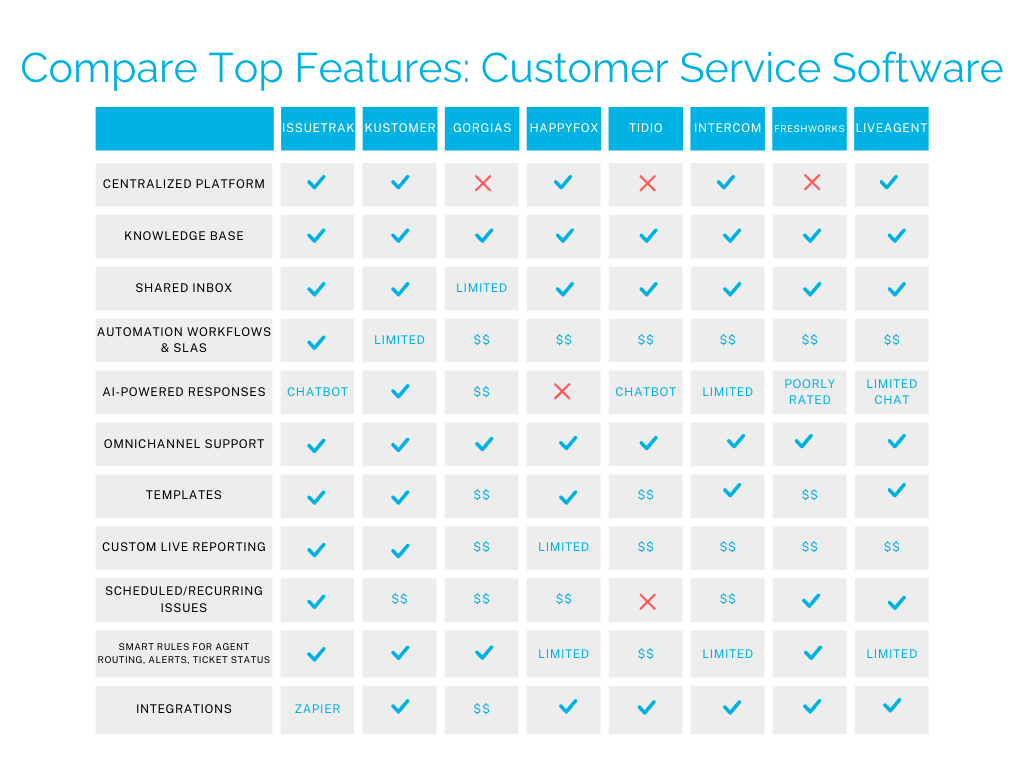
This table offers a high-level summary to help you quickly compare the platforms. We have focused on the most important strategic differences, including the core risks associated with each choice. Pay close attention to the “Core YMYL Risk” row, as it highlights the most probable negative business outcome for each tool.
| Criteria | HubSpot Service Hub | Zendesk | Salesforce Service Cloud | Intercom | Freshdesk | Zoho Desk |
|---|---|---|---|---|---|---|
| Core Strength | Unified CRM & Support | Mature, Scalable Ticketing | Ultimate Customization | Proactive Engagement + Full Ticketing | Balanced & User-Friendly | Unbeatable Value |
| Primary AI Use Case | Workflow Automation | Ticket Intelligence & Routing | Predictive Service (Einstein) | Proactive Conversational AI (Fin) | Agent Assist & Self-Service (Freddy) | Contextual AI (Zia) |
| Agent Assist Tech | Knowledge Suggestions | Real-time Suggestions (Add-on) | Next Best Action | Real-time Suggestions | AI-drafted Replies & Summaries | Basic Suggestions |
| Self-Service AI | Standard Chatbot & KB | Answer Bot (Add-on) | Einstein Bots | Fin Conversational Agent | Freddy Self-Service | Standard Chatbot |
| User Experience | Excellent, Intuitive | Functional, but Aging & Complex | Complex, Requires Admin | Excellent, Modern | Excellent, Clean UI | Clunky & Inconsistent |
| Ideal User | SMBs in HubSpot Ecosystem | Dedicated, High-Volume Support Teams | Large Enterprises | Sales & Marketing-led Teams | Growth-Stage SMBs | Budget-Conscious SMBs |
| Pricing Model | Predictable Seats (with min.) | “Death by a Thousand Add-ons” | High TCO, Consultant-heavy | Unpredictable User-based | Transparent & Scalable | Extremely Low-Cost Suite |
| Core YMYL Risk | Outgrowing its capabilities. | Uncontrolled budget escalation. | Massive implementation cost/failure. | Punitive pricing that penalizes growth. | Outgrowing its “lite” enterprise features. | Over-reliance on a single vendor with poor support. |
| Security (SOC 2) | Yes (Type II) | Yes (Type II) | Yes (Type II) | Yes (Type II) | Yes (Type II) | Yes (Zoho Corp) |
In-Depth Analysis of HubSpot Service Hub & Its Top 5 Alternatives
Here, we will look at each platform in more detail. We have structured each review to give you a clear view of its strengths, its weaknesses, and the specific business type it serves best. This format allows for a fair and direct comparison.
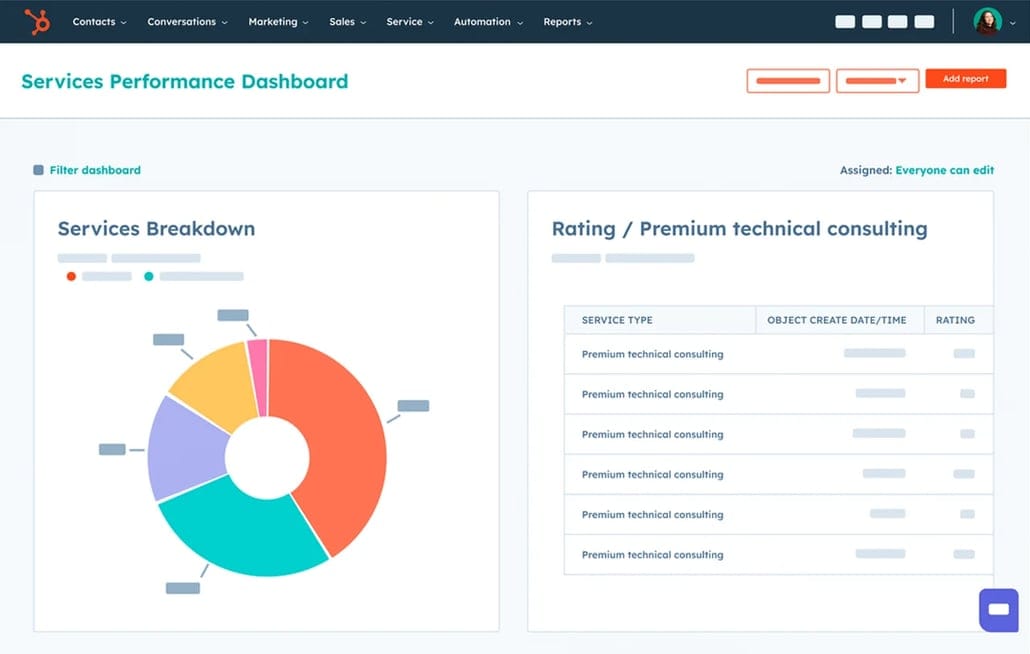
HubSpot Service Hub is a strong contender, especially for businesses already using HubSpot’s CRM, Marketing, or Sales Hubs. Its primary advantage is the seamless, unified view of the customer. Every interaction, from marketing emails to sales calls and support tickets, lives in one place.
Core Features & Capabilities
- Unified Customer Platform: The native integration with HubSpot’s CRM provides a complete customer history without complex setup. This is its biggest selling point.
- Excellent User Experience: The interface is clean, modern, and intuitive for agents, which reduces training time and boosts adoption.
- Predictable Pricing: The per-seat pricing model is generally straightforward, though minimum seat requirements can apply.
✅ Strengths
- Unified Customer Platform integration
- Excellent user experience and interface
- Predictable pricing structure
- Native CRM integration advantages
⚠️ Considerations
- Limited customization capabilities
- Scalability concerns for complex operations
- Cost escalation at higher tiers
- Professional risk of outgrowing capabilities
Best For: Small to mid-sized businesses that are already deeply invested in the HubSpot ecosystem and prioritize ease of use over complex customization.
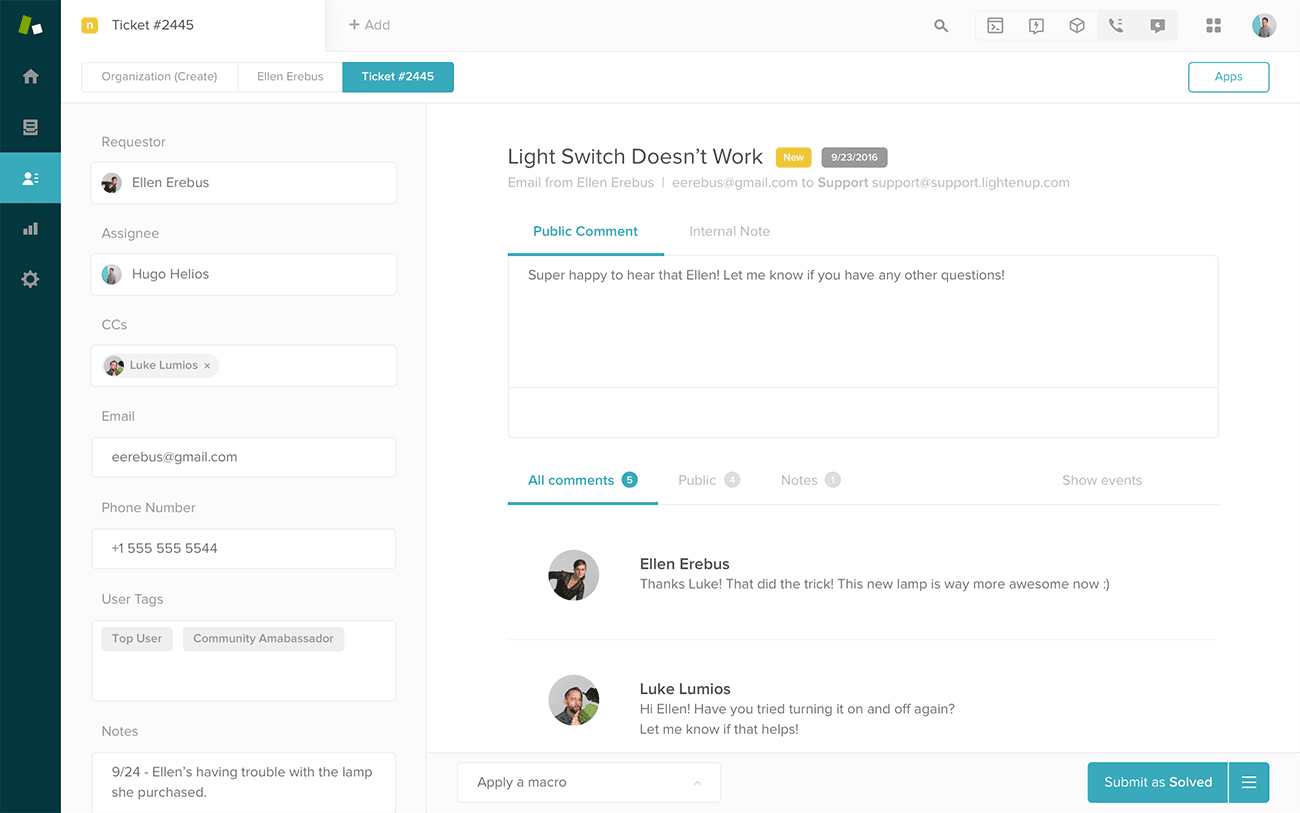
Zendesk is the long-standing leader in the dedicated help desk market. Its platform is built for support teams that need powerful, scalable, and granular control over their ticketing processes. It is a true workhorse for high-volume operations.
Enterprise-Grade Support Capabilities
- Mature & Robust Ticketing: Its ability to manage complex ticket routing, triggers, and automations is unmatched. It’s been battle-tested for years.
- Proven Scalability: It scales from small teams to massive enterprises without a drop in performance.
- Extensive Integration Marketplace: With over 1,500 apps, it can connect to almost any tool, though these often add to the cost.
✅ Strengths
- Mature and robust ticketing system
- Proven enterprise scalability
- Extensive integration marketplace
- Advanced automation capabilities
⚠️ Considerations
- Punitive pricing model with expensive add-ons
- Aging and complex user interface
- Weak native CRM context
- Financial risk of uncontrolled escalation
Best For: Mature, high-volume support teams that view customer service as a distinct operational department and have the budget for a best-in-breed ticketing system.
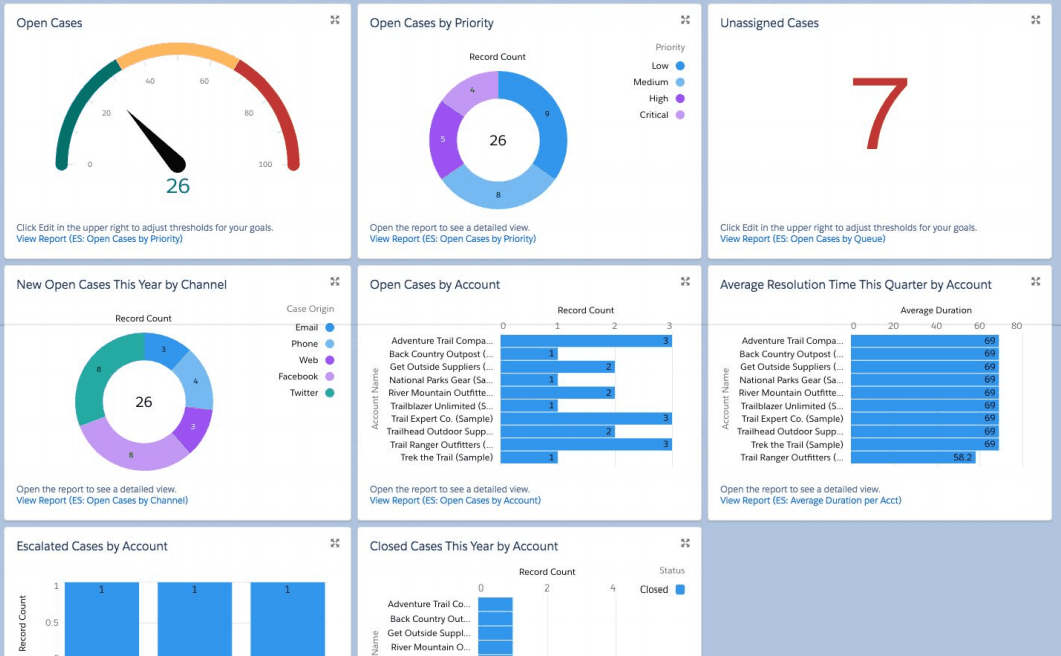
Salesforce Service Cloud is the platform for large enterprises that need customer service woven into every aspect of their business. Its core strength is its nearly infinite customizability.
Enterprise Customization & Scale
- Unparalleled Customization: It can be molded to fit any unique or complex business workflow you can imagine.
- Enterprise-Grade Scalability & Security: It is built to handle the demands of the world’s largest companies, with robust security features.
- Unified Customer 360 View: When combined with Sales and Marketing Cloud, it provides a single source of truth for every customer interaction.
✅ Strengths
- Unparalleled customization capabilities
- Enterprise-grade scalability and security
- Unified Customer 360 view
- Advanced Einstein AI features
⚠️ Considerations
- Extreme cost and complexity
- Requires specialized certified staff
- High risk of misconfiguration
- Massive implementation investment
Best For: Large enterprises with unique support processes, a pre-existing Salesforce investment, and a budget for six-figure implementation costs and dedicated staff.
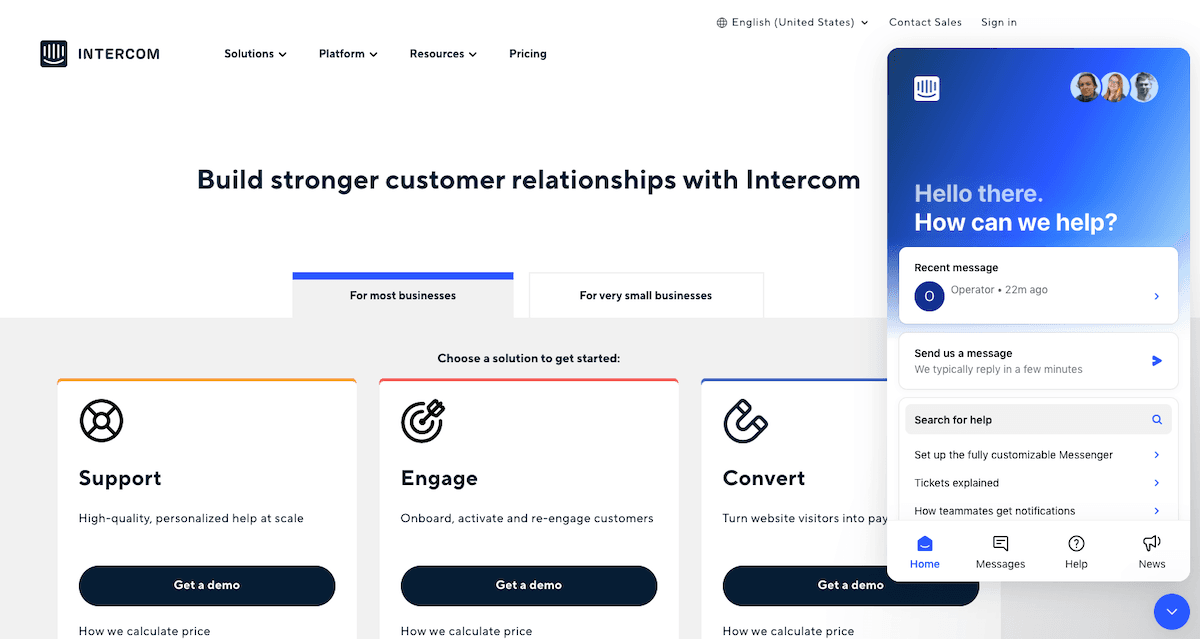
Intercom excels at proactive, in-app communication while offering comprehensive ticketing capabilities. It’s designed to engage users with targeted messages, product tours, and a best-in-class messenger, now combined with full help desk functionality.
Proactive Customer Engagement
- Best-in-Class Messenger: Its web and in-app messenger is the industry benchmark for user experience and functionality.
- Comprehensive Help Desk: Intercom now offers a complete ticketing system with SLA management, advanced routing rules, and ticket management capabilities in a team inbox.
- Proactive Engagement Tools: Features like Product Tours and outbound messaging allow businesses to onboard and support users proactively.
- Strong Conversational AI: Its AI agent, “Fin,” is highly effective at resolving common queries conversationally.
✅ Strengths
- Best-in-class messenger experience
- Comprehensive help desk capabilities
- Proactive engagement tools
- Strong conversational AI (Fin)
⚠️ Considerations
- Predatory pricing model that penalizes growth
- High vendor lock-in risk
- Unpredictable cost escalation
- Budget planning difficulties
Best For: Marketing and sales-led B2B SaaS companies that prioritize proactive customer engagement and can justify the unpredictable pricing.
Freshdesk has become a top HubSpot alternative by offering a modern, feature-rich platform at a transparent price. It successfully balances the power of an enterprise tool with the user-friendliness of a modern application.
Modern User Experience & Transparency
- Excellent User Experience: It is consistently praised for its clean, modern UI that is easy for agents to learn, leading to faster adoption.
- Transparent & Scalable Pricing: It offers a clear, per-agent pricing model without the hidden costs of many competitors, making it easy to budget.
- Robust Omnichannel & AI Features: It includes powerful AI (Freddy AI) for summarization and drafting, often in more accessible pricing tiers.
✅ Strengths
- Excellent user experience and modern UI
- Transparent and scalable pricing
- Robust omnichannel and AI features
- Strong value proposition for SMBs
⚠️ Considerations
- “Lite” enterprise features compared to Salesforce/Zendesk
- Ecosystem integration depth limitations
- AI features gated in premium tiers
- Risk of outgrowing platform capabilities
Best For: Growth-stage SMBs and mid-market companies seeking a modern, user-friendly, and cost-effective platform that can scale without extreme costs.
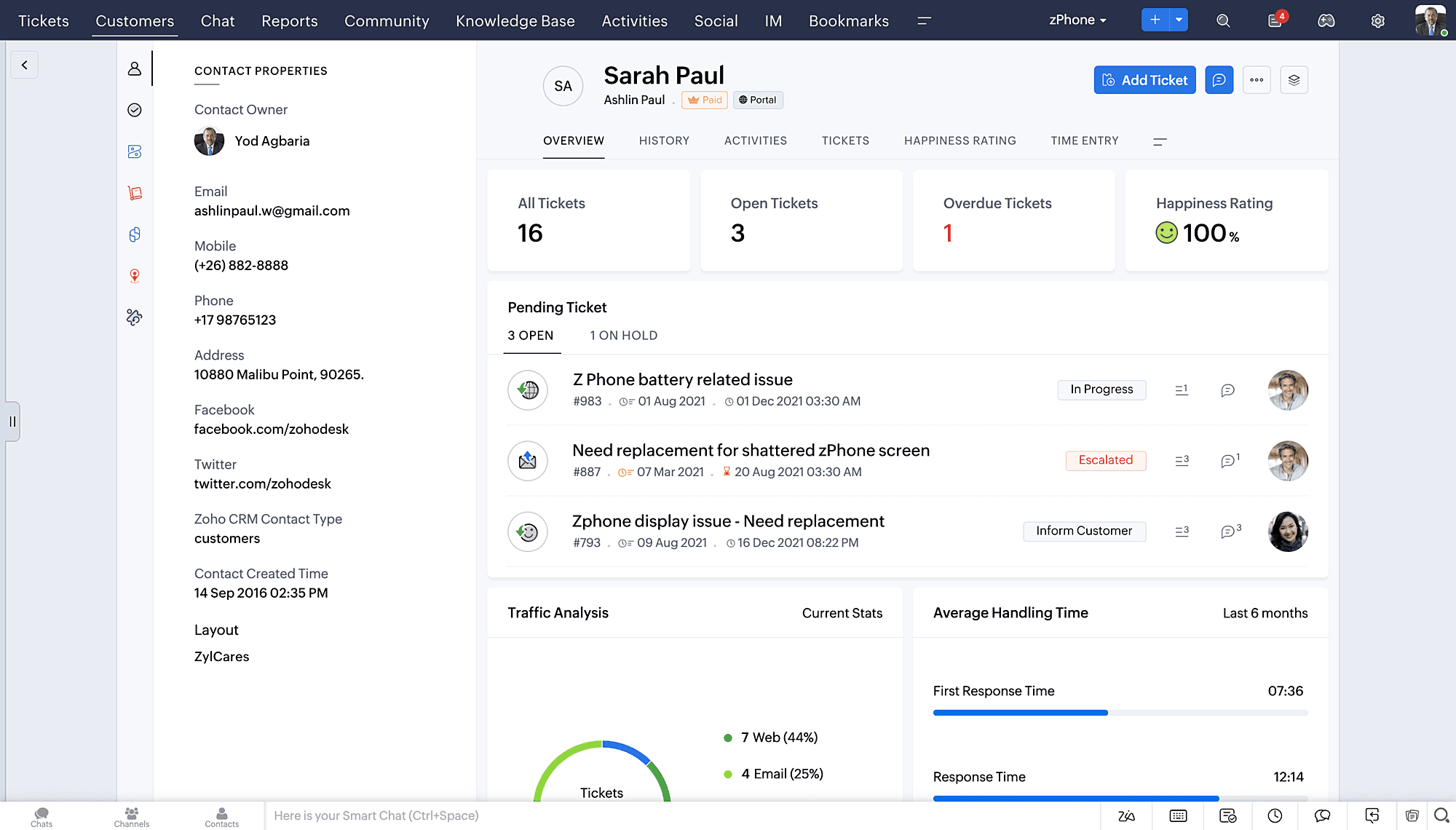
Zoho Desk‘s main advantage is its incredible value, particularly as part of the Zoho One suite. It delivers a surprisingly powerful help desk for a fraction of the cost of any other competitor on this list.
Exceptional Value Proposition
- Exceptional Value for Money: For a low monthly fee, Zoho One provides a help desk, CRM, and over 40 other business apps. The value is unmatched.
- Highly Customizable: Zoho Desk offers powerful automation and workflow capabilities, especially with its “Blueprint” feature.
- Deep Integration with Zoho Ecosystem: For businesses committed to Zoho, it provides a deeply integrated, all-in-one platform.
✅ Strengths
- Exceptional value for money
- Highly customizable automation
- Deep Zoho ecosystem integration
- Comprehensive suite of business apps
⚠️ Considerations
- Inconsistent and clunky UI/UX
- Subpar customer support quality
- “All eggs in one basket” vendor risk
- Steep learning curve
Best For: Cost-conscious small businesses and startups with the technical aptitude to invest in setup, who are willing to trade a polished UI for an unbeatable price.
Comparative Analysis: Total Cost of Ownership (TCO) & Financial Risk
Choosing a customer care platform based on its advertised price is a common and costly mistake. The Total Cost of Ownership (TCO) includes all hidden fees, implementation costs, and required personnel. Understanding TCO is the most important step in mitigating financial risk for your business.
This is often the number one reason companies look for alternatives in the first place. Below is a breakdown of the true costs.
| Criteria | HubSpot Service Hub | Zendesk | Salesforce Service Cloud | Intercom | Freshdesk | Zoho Desk |
|---|---|---|---|---|---|---|
| Pricing Model | Per Seat | Per Seat + Add-ons | Per Seat + Platform Fees | Per Tracked User | Per Seat | Per Seat (or Suite) |
| Hidden Costs | Tier jumps for key features | Feature add-ons, analytics, AI | Consultants, developers, platform fees | User growth penalties | AI features in top tiers | Paid support, implementation partners |
| Implementation Cost | Low to Medium | Medium | Very High | Low | Low | Medium to High (Time) |
| Required Personnel | Admin | Admin | Certified Admin/Developer | Admin | Admin | Admin/Developer |
| Primary Financial Risk | Sudden tier jump cost | Uncontrolled, escalating budget | Massive implementation overruns | Punitive costs for user growth | Outgrowing the plan | High time investment for setup |
- Zendesk & Intercom: These platforms present the highest risk of unpredictable cost escalation. With Zendesk, critical features are sold as add-ons, making the final bill much higher than the initial quote. With Intercom, your success in acquiring users directly leads to a higher bill, creating a difficult financial situation.
- Salesforce: The financial risk here is not in the monthly license but in the massive upfront and ongoing costs. You must budget for expensive implementation consultants and the salary of a full-time certified administrator.
- HubSpot: Costs are generally predictable but can jump significantly when you need a feature that is locked in a higher, more expensive tier. For a comprehensive overview of features and pricing, check out our detailed HubSpot Service Hub Review.
- Freshdesk & Zoho Desk: These two offer the most transparent and predictable pricing models. Their per-agent plans make it easy to forecast costs as your team grows, which is a major financial advantage.
Before signing any contract, we always advise businesses to request a full quote that includes every potential add-on and implementation fee.
Integration Ecosystem Analysis: Preventing Data Silos
An AI Customer Care Tool cannot operate in a vacuum. Its value is magnified by its ability to achieve seamless CRM data synchronization and connect to other business-critical systems. A weak integration strategy creates data silos and inefficient agent workflows.
| Integration Criteria | HubSpot Service Hub | Zendesk | Salesforce Service Cloud | Intercom | Freshdesk |
|---|---|---|---|---|---|
| Core CRM Integration | Flawless (Native) | Deep (Marketplace) | Flawless (Native) | Good (Marketplace) | Good (Marketplace) |
| API Robustness & Limits | Good (Standard REST) | Excellent (High Rate Limits) | Excellent (Extensive APIs) | Good (Designed for Web) | Very Good (Developer-friendly) |
| Key Consideration | Best-in-class for HubSpot users. | Largest app marketplace for flexibility. | The gold standard for enterprise integration. | Prone to vendor lock-in via deep in-app integrations. | Strong native integrations within Freshworks suite. |
When evaluating, your technical team should assess the vendor’s API rate limits to ensure they can support your data volume. Furthermore, distinguish between shallow “logo-level” integrations and deep, bi-directional data synchronization that provides agents a true 360-degree customer view without leaving their primary workspace.
Head-to-Head Security, Compliance, and Data Privacy Comparison
When you handle customer data, especially Personally Identifiable Information (PII), security is not a feature; it is a fundamental business requirement. A data breach can damage your brand reputation and result in large fines. This makes security a top-line business risk that cannot be ignored.
The table below compares the key security and compliance certifications for each platform. We last verified this information in early 2025, but you should always check the vendor’s own trust center for the latest documentation.
| Certification / Feature | HubSpot Service Hub | Zendesk | Salesforce Service Cloud | Intercom | Freshdesk | Zoho Desk |
|---|---|---|---|---|---|---|
| SOC 2 Type II | Yes | Yes | Yes | Yes | Yes | Yes |
| ISO 27001 | Yes | Yes | Yes | Yes | Yes | Yes |
| GDPR Compliant | Yes | Yes | Yes | Yes | Yes | Yes |
| CCPA Compliant | Yes | Yes | Yes | Yes | Yes | Yes |
| HIPAA Availability | Add-on | Add-on | Yes | No | Add-on | Yes |
| Data Residency Options | Yes | Yes | Yes | Yes | Yes | Yes |
Beyond Certifications: Operational Security and Data Handling
While certifications like SOC 2 provide a baseline of trust, operational security is paramount in day-to-day use. CX leaders must scrutinize features that protect sensitive data within the application itself.
- PII Redaction and Data Masking: We verified that platforms like Zendesk and Salesforce Service Cloud offer robust, automated PII redaction to scrub sensitive information like credit card or social security numbers from tickets and transcripts. This is a critical risk mitigation feature.
- Granular Access Control (RBAC): For large or regulated organizations, the ability to define highly specific user permissions is non-negotiable. Salesforce offers the most granular role-based access control (RBAC), allowing precise control over who can view or edit specific data fields, thereby minimizing internal risk.
- Business Associate Agreements (BAA): For HIPAA compliance, simply having the feature available is not enough. A signed Business Associate Agreement (BAA) is a legal requirement. All vendors listed, except Intercom, will engage in a BAA, though typically only for their highest enterprise tiers. This must be contractually verified by your legal team.
- Baseline Compliance: Most major platforms meet key standards like SOC 2 Type II and ISO 27001. This should be your minimum requirement.
- HIPAA and Regulated Industries: If you operate in healthcare or another regulated industry, you must confirm that the vendor offers a Business Associate Agreement (BAA) for HIPAA compliance. This is often an enterprise-tier add-on.
- The Salesforce Risk: As noted earlier, the complexity of Salesforce can lead to a high risk of security misconfiguration. Even with the best certifications, human error during setup can expose sensitive data.
- Verification is Your Responsibility: Never take marketing claims at face value. We recommend having your own legal or compliance team review a vendor’s Data Processing Addendum (DPA) to ensure it meets your specific business needs.
How to Choose the Right HubSpot Alternative for Your Business
The best alternative depends entirely on your business profile, budget, and priorities. Here are our direct recommendations based on common business scenarios.
Before You Choose: Answer These 3 Questions
The best platform is the one that fits your specific business. Before reading our recommendations, take 30 seconds to answer these questions:
- What is our primary goal? (e.g., Unifying our customer data, scaling a high-volume ticket system, or proactive sales engagement?)
- What is our true budget? (Consider not just licenses, but potential implementation costs and the need for specialized staff over the next 2-3 years.)
- How complex are our workflows? (Do we need simple, out-of-the-box processes, or do we require deep, granular customization?)
With your answers in mind, find the scenario below that best matches your business profile.
If You’re a Growth-Stage SMB Prioritizing Value and UX…
- Recommendation: Start your evaluation with Freshdesk.
- Why: It offers the best balance of powerful features, a modern user-friendly design, and transparent pricing that scales predictably with your business.
If You’re a Large Enterprise with Complex Workflows…
- Recommendation: Your primary candidates are Salesforce Service Cloud or Zendesk.
- Why: Choose Salesforce if you are already in its ecosystem and need deep customization. Choose Zendesk for a best-in-breed, scalable ticketing system. Be prepared for high implementation and add-on costs for both.
If You’re a Sales or Marketing-Led SaaS Company…
- Recommendation: Evaluate Intercom.
- Why: Its proactive engagement tools are unmatched for onboarding and converting users. But you must carefully model your expected user growth and TCO to avoid painful pricing surprises down the road.
If Your Budget is the Absolute Top Priority…
- Recommendation: Zoho Desk is the clear choice.
- Why: The value is unbeatable. You must be prepared to invest significant time in setup and accept a less polished user interface.
Frequently Asked Questions (FAQs)
What is the main difference between Zendesk and HubSpot Service Hub?
The main difference is focus. Zendesk offers deep, specialized functionality for ticketing and support operations. HubSpot Service Hub provides broader, but less deep, functionality that is tightly integrated into its all-in-one CRM platform.
Is Freshdesk truly cheaper than HubSpot in the long run?
For many growing teams, yes. Freshdesk uses a simple per-agent pricing model. HubSpot often has seat minimums and requires expensive tier jumps to get key features, which can make it more costly as you scale.
Why would I choose Salesforce Service Cloud if it’s so expensive?
You would choose Salesforce for its unparalleled customization. If your business has unique support processes that off-the-shelf software cannot handle, or if you are already a major Salesforce customer, the value of a perfectly tailored, deeply integrated system can justify the high cost.
Can Intercom replace a traditional help desk like HubSpot?
Yes, for most teams. Intercom has evolved into a comprehensive customer service platform that includes full ticketing capabilities with SLA management, advanced routing rules, and team inbox functionality. While its historical strength is proactive engagement, it now directly competes as a complete help desk solution.
Which HubSpot alternative has the best AI features?
Zendesk, Salesforce (Einstein), and Intercom (Fin) have very powerful AI. But, they often charge a premium or place these features in the highest tiers. Freshdesk (Freddy AI) offers very competitive AI features at more accessible price points.
What are the biggest risks when migrating away from HubSpot?
The biggest risks are data migration integrity, the potential for service disruption during the switch, and the cost and time of retraining your support agents on a new platform. A poorly planned migration can have serious consequences for your customers. For specific guidance on migration strategies, explore our comprehensive HubSpot Service Hub Tutorials and Usecase guide.
Is Zoho Desk powerful enough for a mid-sized business?
Zoho Desk is very powerful under the hood, with extensive customization options. But, its subpar user interface and customer support can create bottlenecks for larger teams, potentially offsetting the cost savings.
Which platform integrates best with a non-HubSpot CRM?
Zendesk has a massive app marketplace with over 1,500 integrations. Salesforce has the native advantage of being a CRM itself. Both are strong choices for integrating with other business-critical systems.
Important Disclaimers:
Technology Evolution Notice: The information about AI Customer Care Tools platforms and alternatives presented in this article reflects our thorough analysis as of 2025. Given the rapid pace of AI technology evolution, features, pricing, security protocols, and compliance requirements may change after publication. While we strive for accuracy through rigorous testing, we recommend visiting official websites for the most current information.
Professional Consultation Recommendation: For AI Customer Care Tools applications with significant professional, financial, or compliance implications, we recommend consulting with qualified professionals who can assess your specific requirements and risk tolerance. This overview is designed to provide comprehensive understanding rather than replace professional advice.
Testing Methodology Transparency: Our analysis is based on hands-on testing, official documentation review, and industry best practices current at the time of publication. Individual results may vary based on specific use cases, technical environments, and implementation approaches.
Final Verdict: Which HubSpot Alternative Should You Choose in 2025?
There is no single “best” alternative to HubSpot Service Hub. The right choice depends entirely on your specific business context, budget, and long-term goals. Our analysis shows a few clear leaders for different needs. Freshdesk offers the best overall balance of features, usability, and value for most growing companies. Zendesk remains the top choice for pure ticketing power, provided you have the budget to support it. And Salesforce is the default for large enterprises that require deep customization within its ecosystem.
Ultimately, a comparison chart can only take you so far. Our final and most critical recommendation is this: do not sign a contract until you have run a pilot program. Select your top two candidates and have your support agents use them in a real-world setting. Agent feedback will reveal invaluable insights about usability and efficiency that you can’t find in a demo. This is the single best way to mitigate the professional risk of poor user adoption and ensure the platform you choose becomes a long-term asset, not a costly liability.
For more information, check out our complete guide to AI-Powered Customer Support. If you have specific questions about any of these platforms, our detailed HubSpot Service Hub FAQs section addresses the most common implementation and migration concerns.

Leave a Reply